
by Woofability…
For those of you who don’t know our background, we met over 15 years ago when we were running C.A.R.I.A.D. (Care and Respect Includes All Dogs) an anti-puppy farming campaign based in Wales. Our purpose was to highlight the plight of breeding dogs and their puppies kept in squalid conditions, improve legislation and educate the public about how to avoid supporting this vile trade.
Over the years, we rescued many puppy farm dogs, both directly from farms and indirectly through reputable rescues. We eventually joined forces with the amazing Dr Marc Abraham OBE, and after many torturous years of campaigning, our work culminated in the introduction of Lucy’s Law — a ban on the third-party sale of puppies in pet shops and by dealers — in 2020.
So you’ll understand why this blog is very personal to us.
Over the years, we’ve supported many friends and rescuers in their efforts to highlight the plight of dogs caught up in the dog meat trade, specifically in China and South Korea. We’re heartened to see organisations travelling to these countries to support rescuers on the ground, because without them, where would these dogs safely go? Without their efforts, we would remain unaware of the suffering endured not only by these dogs, but by the families who have lost them. What many people don’t realise is that some of these dogs are stolen family pets, or former breeding dogs and their offspring. Heartbreakingly, disabled dogs — already so vulnerable and so deserving of care and compassion — and senior dogs, whose twilight years should be filled with comfort and love, are instead ending their days in the most unthinkable way.
We recognise that some members of the public, along with certain rescues and charities, question why dogs are brought in from abroad when we are facing a rescue crisis here in the UK. Our personal view, however, is that without countries like the UK, with higher welfare standards, stronger legislation and advanced veterinary care, and without supporting rescuers overseas, meaningful change simply won’t happen. These dogs, and the people fighting for them, would have nowhere to turn. From our years of experience, we firmly believe that education is the key to lasting change.
You may ask whether funds should instead be kept for caring for and supporting the dogs already in UK rescues. However, what you’ll often find is that rescuers fundraise separately for overseas dogs and are transparent about this, so supporters can make an informed choice. There are organisations and charities currently travelling to China to highlight the plight of dogs caught up in the dog meat trade and to offer sanctuary to the small number of survivors they are able to help.
Here are just some of the people who have adopted dog meat trade survivors, helped and are helping to bring them to safety, or played a role in shutting down dog meat farms.
Lisa Garner, whose dog Lucy – a puppy farm survivor – was the inspiration for Lucy’s Law writes:
“This is Dottie, my tiny rescue poodle who was saved from the abhorrent meat trade. Dottie weighed only 1.8kg when she was rescued, and had she not been saved, she would more than likely have been boiled due to her tiny size.
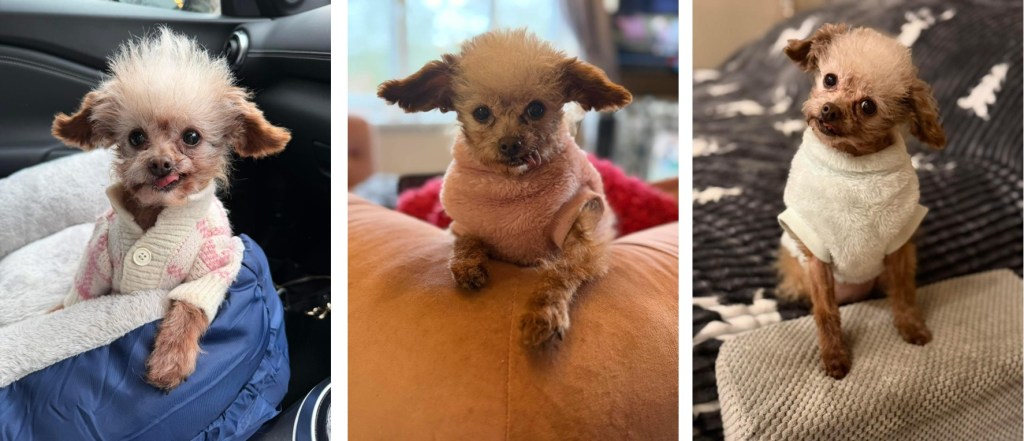
I adopted Dottie nearly three years ago now, and she is an absolute joy to be around. Even after all the years of abuse she endured, Dottie is the most loving, special little character you could wish to meet. What she lacks in size, she definitely makes up for in personality.
Dottie is very much a Velcro dog and suffers from separation anxiety, so she pretty much comes everywhere with me — although, to be honest, I’m not sure whether it’s me or Dottie who has the separation anxiety!
Dottie has brought nothing but unconditional love and happiness to my life, and I can’t thank Silver Fox Dog Rescue enough for letting me adopt such a special little girl.”
Peter Egan says:
“When you consider that dogs have been humankind’s companions for thousands of years, teaching us how to survive, how to live in the moment, how to express unconditional love. They protect us, they lead the blind, they detect cancers, and a multitude of illnesses that occur in us humans.
They don’t judge or challenge us; they give us unconditional love. And how do some repay this gift? They beat and torture them. They breed them for slaughter and then they eat them! I find it incomprehensible that any human can behave in this way, but they do. However, in East and Southeast Asia there are inspiring indigenous groups working in the countries where these atrocities happen to whom I give my undying support.”
Dr Marc Abraham OBE says:
“Having travelled to South Korea with Humane World International (formerly Humane Society International) to help shut down a few dog meat farms, I’ve witnessed first hand the shocking conditions these poor dogs are kept in, and the brutal way they’re killed. Hopefully, widespread exposure of this vile trade by all likeminded campaigners and charities helped fuelled global outrage to push South Korea to finally pass a landmark law in January 2024 banning the breeding, slaughter, and sale of dogs for human consumption, with full enforcement taking effect in February 2027.
This shows that change can happen, plus everyone and anyone can play a part in shaping the future for dogs, other animals, and humans too, you just have to care enough to then do something about it.”
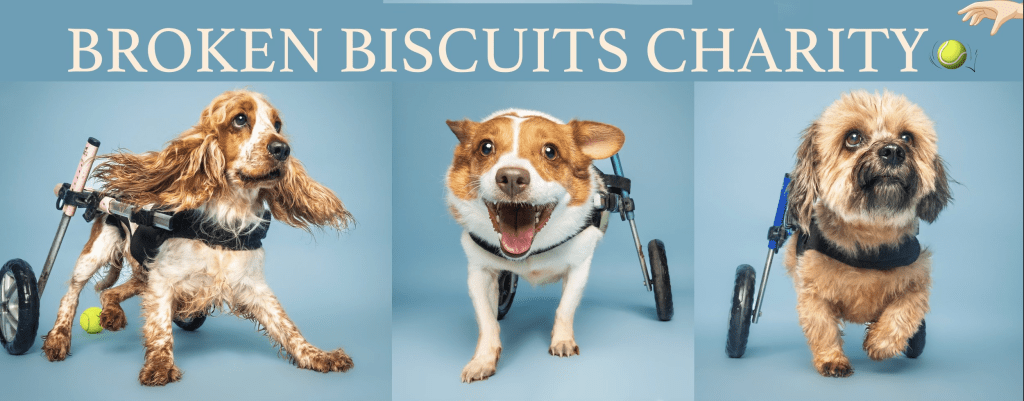
In March 2026, British disabled dog charity Broken Biscuits, in partnership with The Vet Station, will travel to China to support local charities rescuing dogs from the meat trade. The mission has been developed in collaboration with Slaughterhouse Survivors, with the aim of easing the immense burden carried by shelter teams and improving outcomes for disabled dogs who are so often left behind.
Broken Biscuits Co-founder Cassie Carney explains:
“This trip isn’t about swooping in to ‘fix’ anything. It’s about standing shoulder to shoulder with Hayley and her team who already give everything. If we can reduce even a fraction of the load they carry, that would be a help.
Broken Biscuits became aware of the challenges facing the shelter through dogs arriving in the UK with complex, untreated neurological and orthopaedic conditions — not due to neglect, but because specialist care can be difficult to access locally with the volume and complexity of cases.
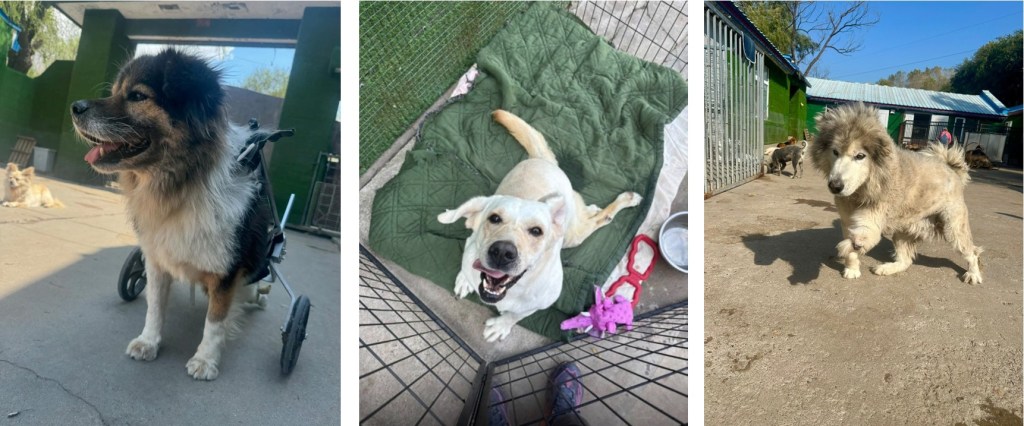
Because we work closely with UK veterinary specialists from the Vet station , the charity recognised that many dogs could regain mobility and therefore increase adoptability with the right tools and treatment plans. For some dogs, specialist surgery is the difference between living every day in pain and finally knowing freedom and independence.”
You’ll be able to read more about Broken Biscuits and The Vet Station’s trip to China in our forthcoming follow-up guest blog.

 WOOFABILITY