The Dog Who Changed Everything: My Journey to China and Back

A guest blog by Millie O’Neill…

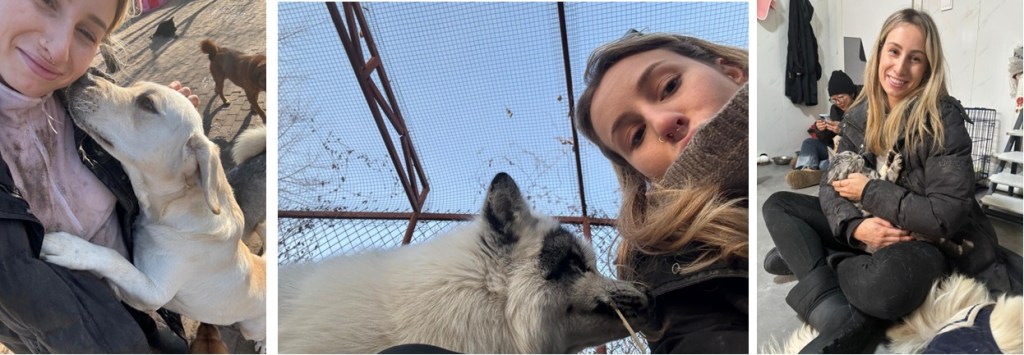
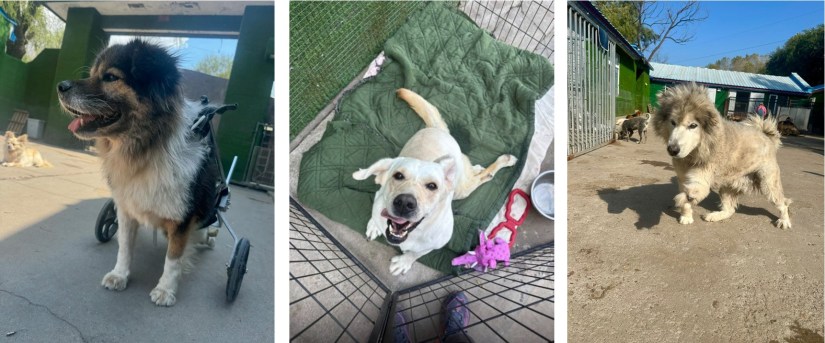
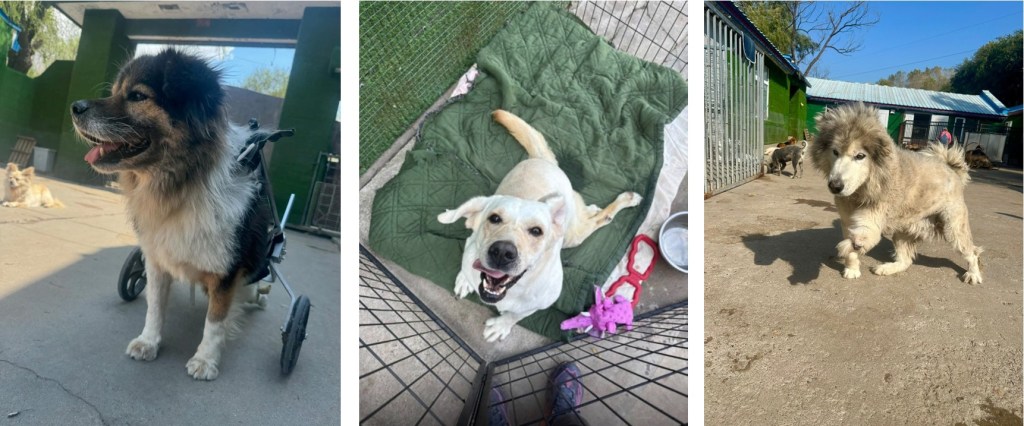
In November–December 2025, I travelled to China to volunteer with a charity very close to my heart: Slaughterhouse Survivors (Harbin SHS Rescue). SHS rescues, rehabilitates, and rehomes animals – predominantly from the meat trade, but also any animal in need.

I first discovered the charity around 2018–2019 on Instagram. I’ve always been an animal lover and was aware of festivals like Yulin, but seeing the reality of animal welfare in China year-round truly opened my eyes.

I reached out to volunteer back then, but I was too young. As time went on, my determination to help grew stronger, but I knew I wanted to bring more than just good intentions. That’s when I decided to train as a Registered Veterinary Nurse (RVN).

I left my job in 2020, started university that September, and qualified in 2024. After gaining experience in both first opinion and hospital settings, I found myself with a three-week gap between jobs. Initially, I planned to rest, but then it hit me: I was finally in a position to do something I’d dreamed about for years. I could go to China!

With only 4–5 weeks to prepare, I had to organise everything quickly… and raise money too.

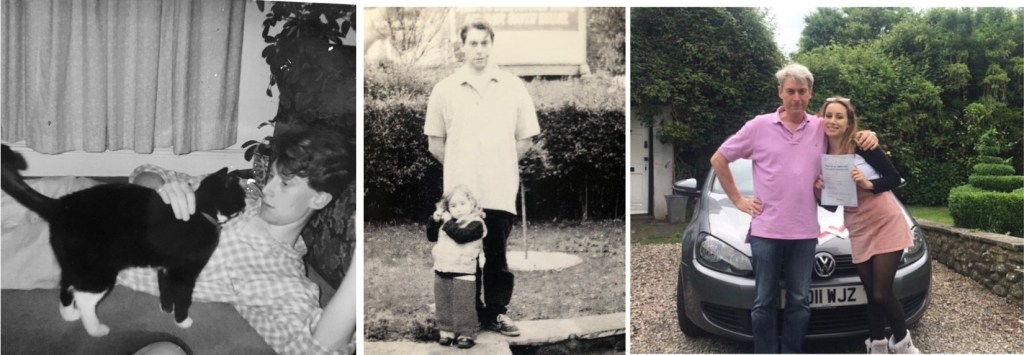
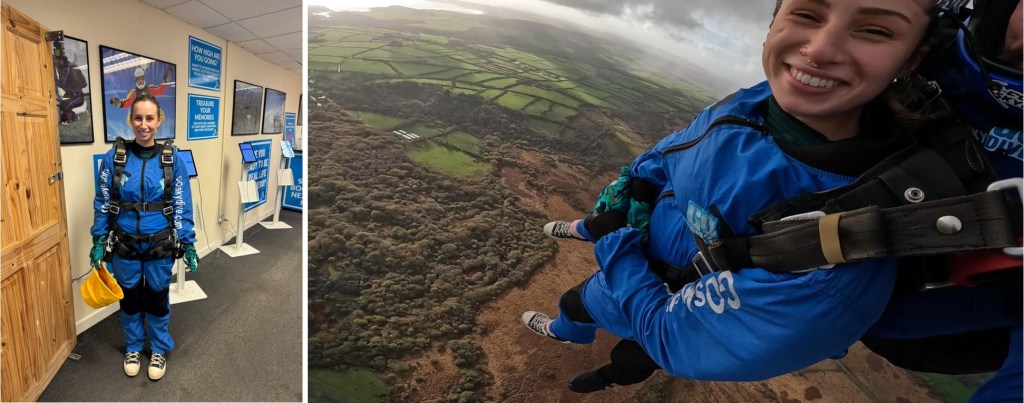
In 2019, my dad passed away from cancer when I was 20. Before he became unwell, we had talked about doing a skydive together for charity, but when it came to my 18th birthday, he was too sick. That never happened, but the idea stayed with me.

So, in November 2025, I finally did it – raising money for SHS in the process.

It was terrifying, but incredible. As someone who has struggled with anxiety and depression since my teens, jumping out of a plane, and then travelling across the world, felt like two things I needed to do for myself. I remember thinking, if I can do this, I can get on a plane to China!

Preparing for China

The weeks leading up to the trip were intense. I had to organise my visa, travel, accommodation, and essentials like a VPN – without one, you can’t access most Western apps in China. I also learned (slightly too late) how important an international eSIM is.

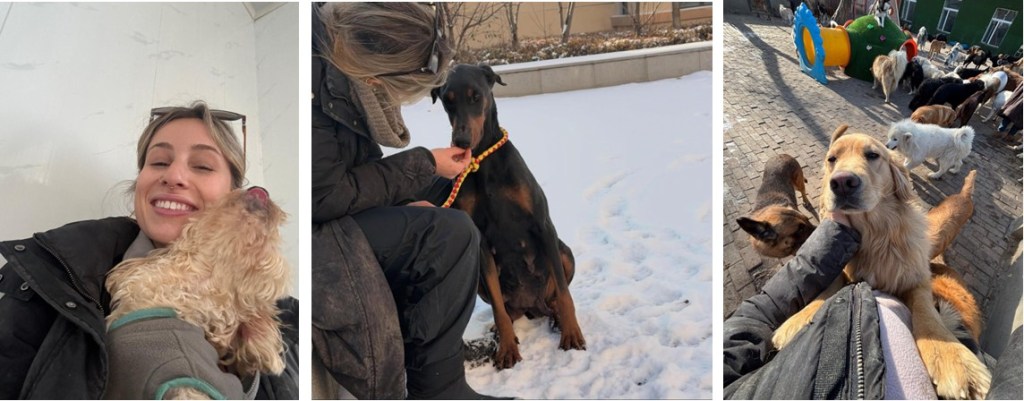
Harbin’s winter temperatures can drop to -30°C, so I had to invest in proper gear, thermals, boots, gloves, which, I won’t lie, I enjoyed shopping for.

The entire trip cost around £4,000, including flights, visa trips to London, accommodation, and spending money. A large portion of this was due to my return journey, where I volunteered as a flight escort for rescue dogs – travelling from Harbin to Shanghai, then Paris, before returning to the UK.

I funded the trip using inheritance from my dad, which felt like a meaningful way to honour him.

Life at the Safehouse

I arrived in China on 8th November. My plan was simply to help wherever I could, but very quickly I became involved with the on-site veterinary team.

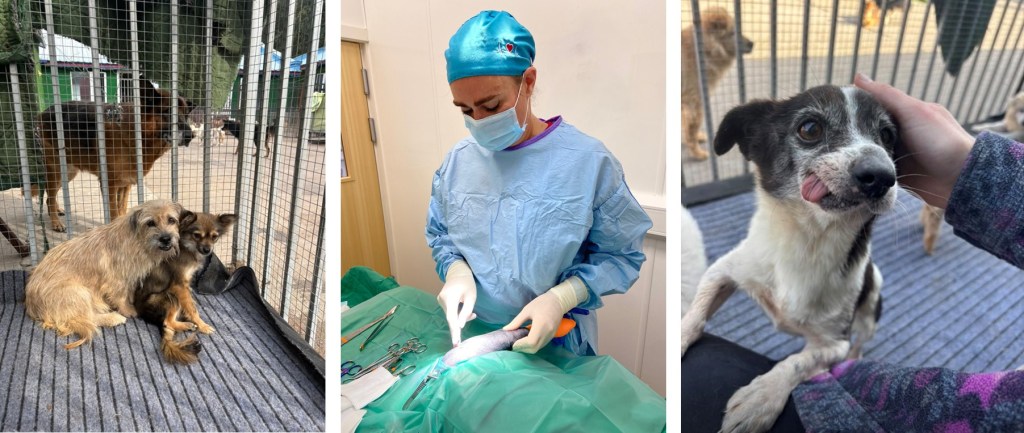
The scale of the rescue is overwhelming – around 1,400 dogs, with just one vet and two nurses. I spent most of my time supporting them clinically, helping train staff, running a CPR course, and creating a detailed document of standard operating procedures for them to use going forward.

It became clear how understaffed they were, so I began sharing my experience on social media to encourage more volunteers, especially veterinary professionals. I’m proud to say it led to a significant increase in volunteer interest.

Meeting Bee

During my time there, I met Bee.

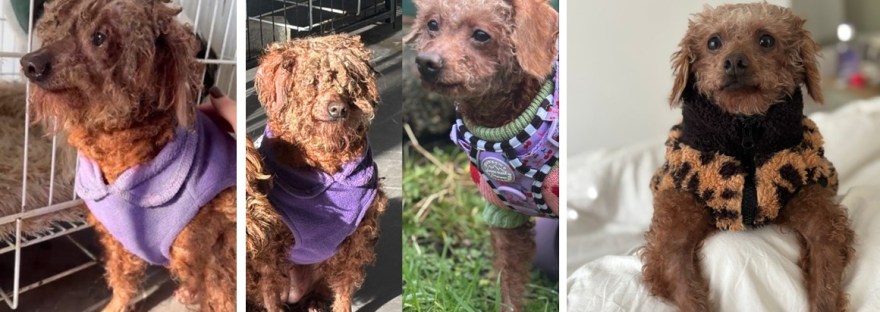
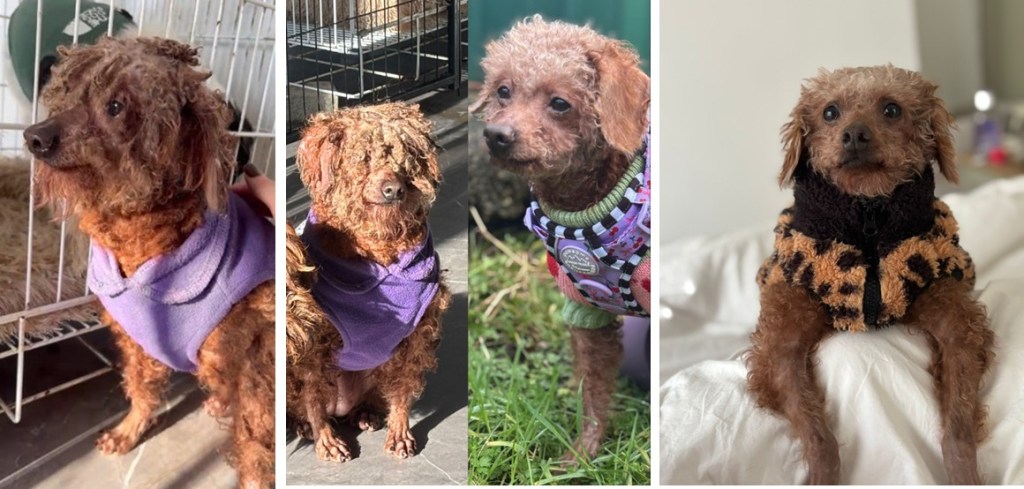
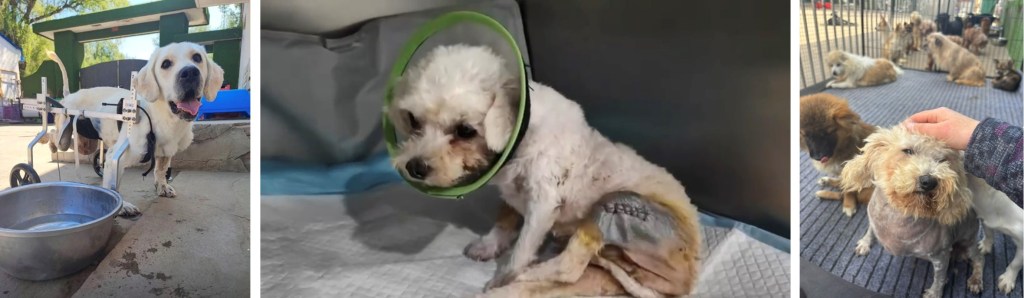
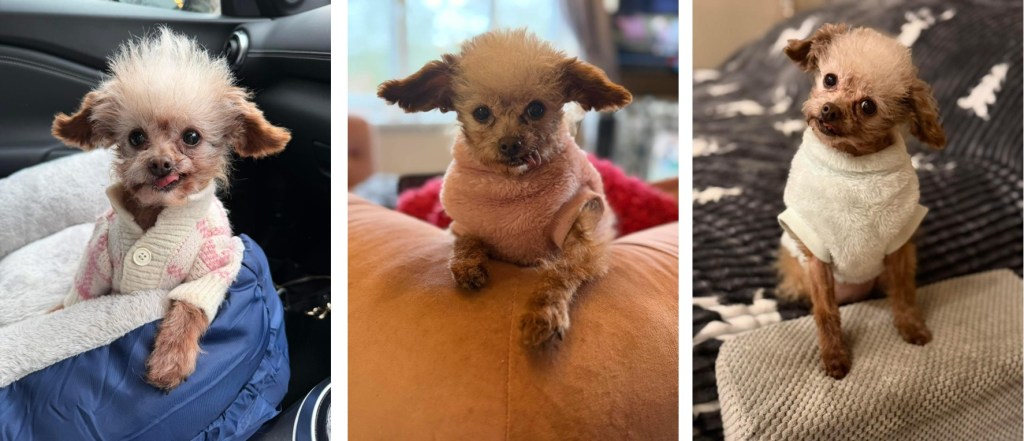
She was a small poodle rescued in 2023 from a breeding facility, where she had also been used as a blood dog. When I first saw her, she was cowering in the corner, unable to make eye contact, terrified of any human interaction. She was severely matted and clearly traumatised.

I knew instantly I wanted to help her.

Every day, I spent hours sitting quietly with her in a room at the clinic, using food to gently build trust. At first, she would hide in a crate, only creeping out slightly. But little by little, she grew braver.

By the end of my two weeks, she had learned her name and would wag her tail when she saw me. She was still scared, but there was progress. That’s when I made the decision to adopt her.

Bringing Bee Home

Bee arrived in the UK at the end of January, and her journey has been far from easy.

Shortly after arriving, she became unwell and was diagnosed with pancreatitis. There were moments where we weren’t sure she would pull through. She required intensive treatment, including a feeding tube, and it was incredibly difficult, especially knowing her past and how easily she associated humans with pain.

She bit me several times during this period, and I worried constantly that the experience would undo all her progress.

But she pulled through.

Where We Are Now

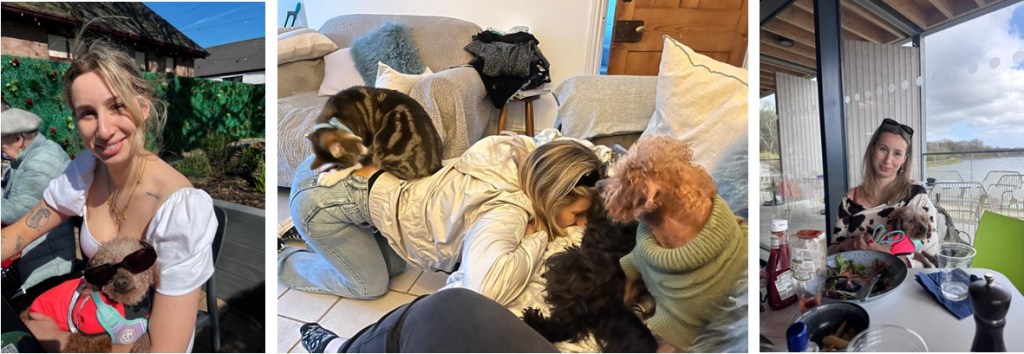
After two months, the transformation in Bee has been incredible.

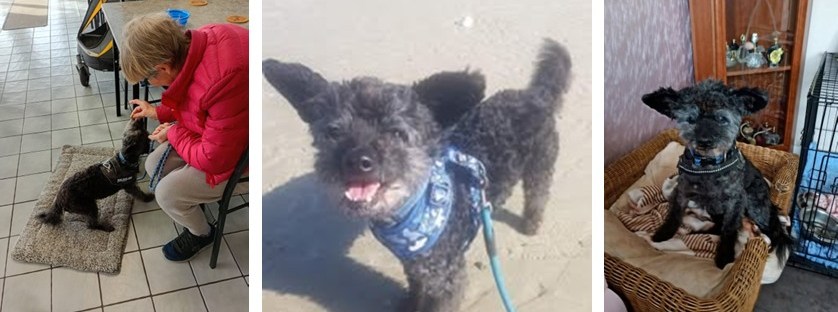
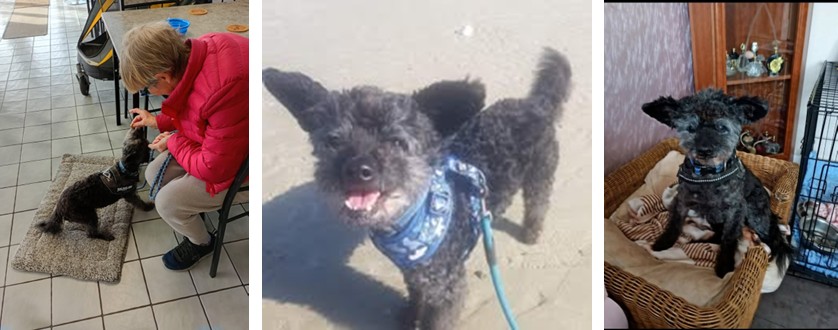
She can now walk on a lead, wags her tail constantly, loves cuddles, and is beginning to approach strangers, something that would have been unthinkable before. Even small things, like every day noises, no longer send her into panic.

She’s slowly learning what it means to feel safe.

Why This Matters

Without Slaughterhouse Survivors, I wouldn’t have become an RVN – or found Bee.

The reality for many of these animals is heart-breaking. The stories I heard while in China were difficult to process – dogs that had been abused, mutilated, or pushed to the point of trying to harm themselves. It’s easy to look away, but this is their reality.

People often asked why I would travel to China instead of helping in the UK. My answer was always the same: in the UK, there is support, volunteers, donations, awareness. In China, these rescues are desperately under-supported.

Despite what people may think, China felt incredibly safe to me. What didn’t feel right was knowing animals there are living in fear while we choose not to see it.

Looking Ahead

I hope to return to China in the future. Until then, I’ll continue supporting Slaughterhouse Survivors and raising awareness.

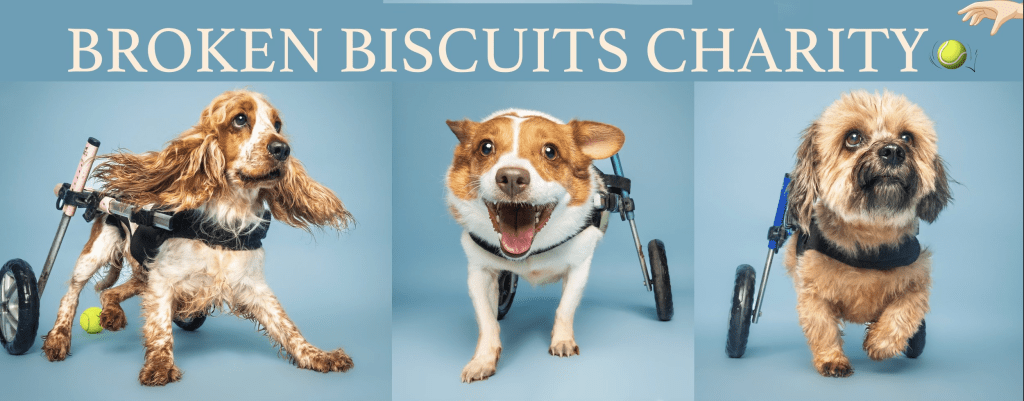
I’m also proud to support a UK-based charity, Broken Biscuits, which helps disabled dogs, including many rescued from China. They’re doing incredible work, and more dogs will be arriving in the coming months to begin new lives.

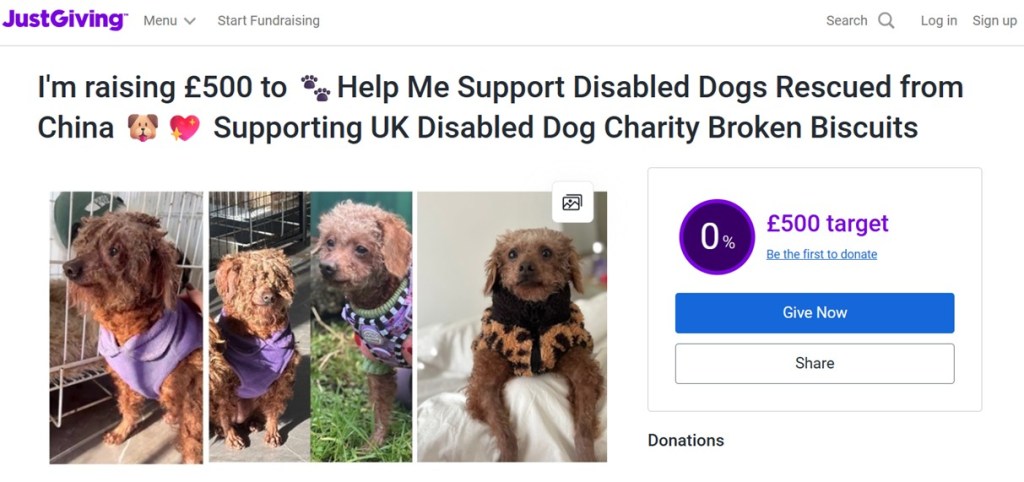
Bee and I have set up a fundraiser to support them. Any donation will go towards medical care, equipment, and giving these dogs the lives they deserve. I’ve put the link to my fundraiser below and the links to Broken Biscuits so you can follow them and see what amazing work they do.

Visit my fundraiser here – www.justgiving.com/crowdfunding/emelia-oneill-2

www.brokenbiscuits.org
www.instagram.com/brokenbiscuitscharity
www.facebook.com/BrokenBiscuits.org

Scottie – My Accidental Wild Card

A guest blog by Christina England

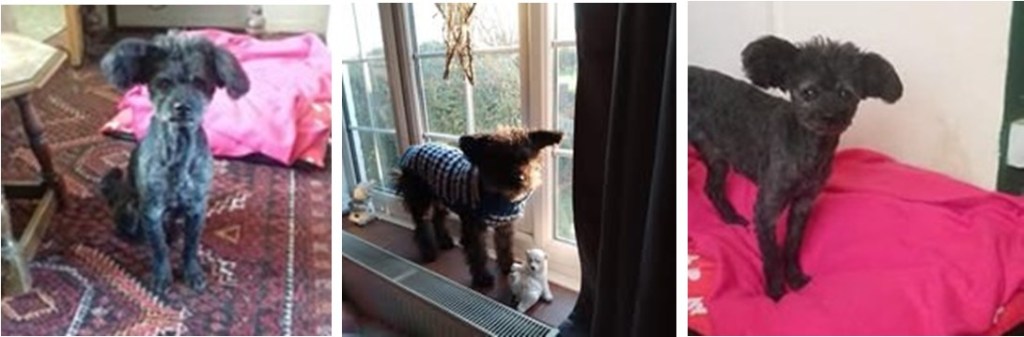
My name is Christina England and I have a total of seven dogs and I share the care of another dog with my friend. I am not a rescue or a charity. Everything that I do, I do out of love and compassion for dogs that others prefer not to open their hearts to. Most of my dogs are either ill or have disabilities and today I am going to write about my eighteen year old dog, Scottie, who is now blind with dementia.

Scottie, is what I call my accidental wild card. At the time that Scottie came into my life, I had three dogs and had been a fosterer for around ten years.

In 2020, just after the lockdown, I received a message from the rescue that I fostered for, asking me if I could possibly do an emergency foster, as several of the new arrivals from Romania had nowhere to go. As I had no fosters in at the time, I offered to take one. I was shown a photo of a sweet looking dog that they said was around two years old and I agreed to offer him a placement.

Why I agreed to foster Scottie, I will never understand because like many others I had never been too keen on black dogs. I suppose that it was because the rescue had stressed that it would only be a few weeks and the poor little dog was arriving from Romania with nowhere to go.

When Scottie arrived, he appeared to be very different to his photo. For a start, he was the scruffiest, smelliest and thinnest little dog that I had ever seen and he was definitely a lot older than two. Nevertheless, I brought the other dogs into the garden to say hello and as he was handed to me, I checked his microchip against the paperwork and as everything was correct, I signed the papers.

As I had a friend interested in adopting him, she was also in the garden to meet him. After my friend and my dogs had said hello, I carried him inside and put him down on a soft bed that I had prepared for him. However, instead of settling down or exploring his environment like my previous fosters had done, he just sat there in one position shaking from head to toe.

I knew from experience that many street dogs have never been inside a house before, and therefore I was fully aware that the whole experience of travelling thousands of miles on a van, and then being handed over to a complete stranger before being taken into a house, is often a really stressful and overwhelming time for them.

As I went over to him, he looked absolutely terrified and backed himself into a corner as far away from me as possible. It was so sad to see him so frightened. I had never seen a dog that was as shut down as this little boy, he was just so terrified of humans and my heart went out to him. I decided to put some food and water near him and leave him to decompress on his own for a while.

After about twenty minutes, I went back into the room and he just sat there bolt upright, staring at me with his sunken terrified little eyes. For a while his eyes just followed me around the room and every time I took even one foot closer to him, he shrunk back into his corner absolutely terrified. I was pleased to see that he had eaten his food and had managed to drink a little of the water that I had left for him.

I decided to leave him on his own to get used to his surroundings, but just as I was about to leave, he suddenly got up and went over to the wall, lifted his leg and proceeded to do the longest wee that I had ever seen followed by a large poo, right there in the middle of the lounge. I just smiled at him and said to him gently, I bet you feel better for that don’t you? He just looked up at me wide eyed as I cleared up the mess and put some puppy pads down.

I decided to take him and my other dogs into the garden. Fortunately, they didn’t appear to be too bothered by this somewhat strange little dog with massive ears, invading their space and left him alone while he walked round sniffing. It wasn’t long before he once again cocked his leg for another wee. Since that very first day, Scottie has always continued to relieve himself outside and absolutely loves going into the garden to explore.

I never planned to keep Scottie, but somehow no matter how hard I tried, I just couldn’t find him a suitable home. He was just too nervous and backed away from anyone who went anywhere near him. Sadly, my friend who had originally wanted to adopt him decided that he was not suitable because he did not get on with her other little dog.

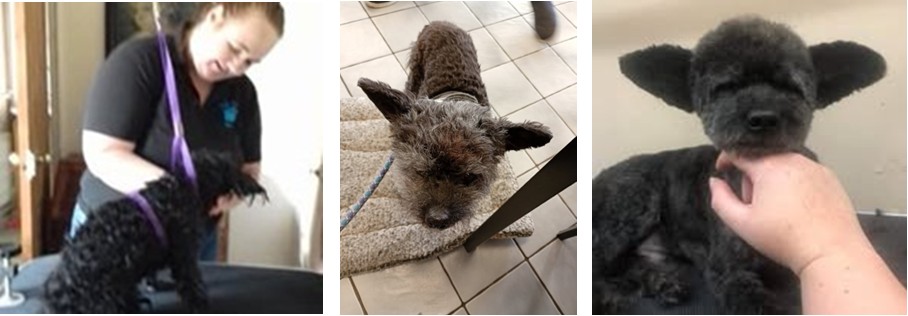
It took me weeks to get a collar on him and even longer to get a harness on him. He was just so frightened of human touch, that most of the time just getting anywhere near him, was virtually impossible. One thing that I had noticed was that Scottie scratched continually from the first day that he arrived. His skin was very red and sore and he smelt awful. As he was so nervous, taking him anywhere including the vets, was going to be very difficult and therefore I decided that I would get Meg, my wonderful groomer, to groom him at home.

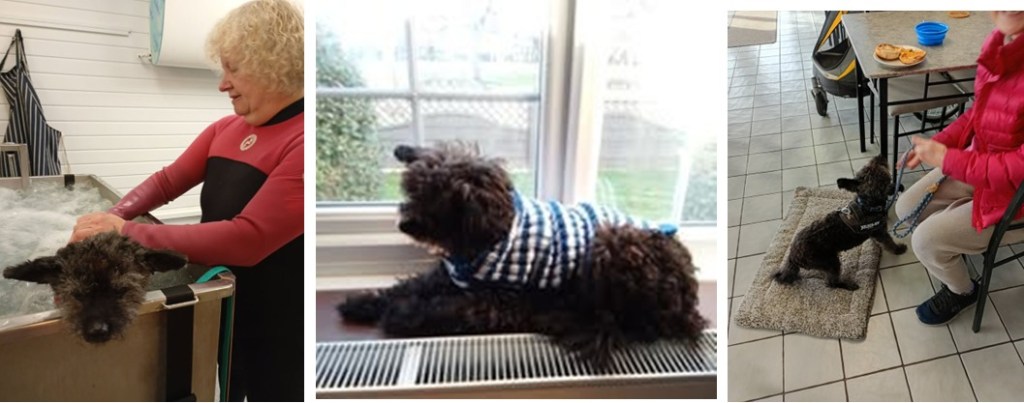
I was thrilled to see that after some gentle tender loving care from Meg, he really did appear to enjoy his first groom, although I must admit getting him into a bath was not easy. He certainly appeared a lot more comfortable after his groom and everyone had to agree that he did smell a hundred times better.

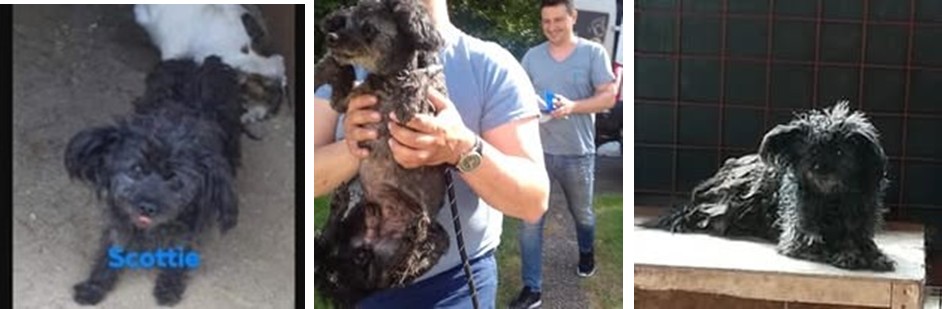
After about ten weeks or so, a lady from the rescue came to see how Scottie was settling in. Obviously, the plan had always been to find Scottie a home, however, even she had to agree that he was too terrified of everything to be adopted, so it was agreed that he should stay with me for a few months. She said that the rescue believed that he was actually around the age of eleven and had been found roaming the streets. The photos of him just after his rescue, were heart wrenching. He just looked so matted and scared.

I will never forget his first walk, even getting him to go to the gate, was near on impossible. However, once I carried him across the road and onto the grass, he began to relax a little and eventually began to enjoy his first adventure, although he definitely was not a fan of the lead.

It was after I had had Scottie for around four months that I began to see him beginning to relax around me. He would never come over for a cuddle, but sometimes he would come near enough for me to reach out and pat him and occasionally he would even give me a little kiss on the hand.

As hard as I tried not to fall in love with this strange little dog, I began to soften towards him. One day, I was on the beach with my friend, when she asked me why I didn’t just adopt Scottie. I said that it was because I didn’t really want another dog. She said, ‘well, if anyone can help him, you can.’ I said that I was not sure if I could help him because I believed that he was far too damaged to be completely rehabilitated. She said, ‘I believe that you can.’

I thought about what she said for a few days, and decided that it would be very unfair to try to rehome him and that moving him would probably damage him even more, so I decided to apply to adopt him, and give him the best life that I could. So that’s how I became another failed fosterer and adopted my accidental wild card.

Over the years, although Scottie gradually adapted to living his life in a house, he has made it very clear that he does not like living in the countryside and he absolutely hates treading on dry leaves, twigs and getting muddy. I have always thought of him as more of a town dog, a bit like the dog Tramp, from the Disney film, ‘Lady and the Tramp.’ I can just imagine him hanging around the local cafes and bars waiting for the owners to throw him left over scraps.

He really has embraced life since being adopted and has enjoyed many adventures over the years. Each and every day, I began to see little improvements and gradually over time, he became the little dog he was always meant to be.

Sadly, around a year ago, Scottie began to develop early signs of what I believed to be dementia. He began to get confused and pace around the room bumping into the other dogs. He would also get lost in the garden and appeared to lose all sense of direction. The vets confirmed that he was indeed suffering from the early stages of dementia and he was also practically blind. I was asked if I wanted to have him put to sleep but I decided I would persevere, and care for him for as long as I was able to.

Although, he continues to pace around the room endlessly, he is still clean. He loves going out for walks and knows exactly who is with him and gets so excited when friends come in. He loves his food and knows all his routines and exactly when it is treat time.

For now, I am giving him the best life that I can. We are currently completing a bucket list of things we want him to experience before it is our time to say goodbye.

One thing is for sure, I will definitely never forget my funny little dog with the sticky out ears.

And as for adopting black dogs and senior dogs, Scottie has taught me that all dogs deserve to be loved and I would definitely adopt a senior dog or another black dog in the future.

** Since the publication of Scottie’s story, it is with the heaviest of hearts that we have to share the news that Scottie passed away on Tuesday, 5th May. He was the most beautiful boy and was loved beyond measure. R.I.P. little man, you were the best 💔 Run free and say hi to all our doggies who will be there waiting for you xxx

Broken Biscuits & The Vet Station on a Specialist Mission to China

In March 2026, British disabled dog charity Broken Biscuits, in partnership with The Vet Station, will travel to China to support local charities rescuing dogs from the dog meat trade.

The mission has been developed in collaboration with Slaughterhouse Survivors, with the aim of easing the immense burden carried by shelter teams and improving outcomes for disabled dogs who are so often left behind.

Standing With Those Who Carry the Heaviest Load

Shelter workers at Slaughterhouse Survivors juggle nursing, fundraising, construction, cleaning, advocacy and round-the-clock care — all while providing safety and love to dogs rescued from unimaginable cruelty. Many of these dogs survive, but remain in the shelter for years simply because they are disabled. They are the dogs people love to watch in videos — but rarely choose to adopt.

Broken Biscuits Co-founder Cassie Carney explains:

“This trip isn’t about swooping in to ‘fix’ anything. It’s about standing shoulder to shoulder with Hayley and her team who already give everything. If we can reduce even a fraction of the load they carry, that would be a help.”

From Awareness to Action

Broken Biscuits became aware of the challenges facing the shelter through dogs arriving in the UK with complex, untreated neurological and orthopaedic conditions — not due to neglect, but because specialist care can be difficult to access locally with the volume and complexity of cases.

Because we work closely with UK veterinary specialists from the Vet station , the charity recognised that many dogs could regain mobility and therefore increase adoptability with the right tools and treatment plans. That insight became a plan

What the Mission Will Deliver

During the March 2026 visit, our volunteer team will:

  • Provide hands-on training and shared expertise to support local vets and caregivers
  • Transport specialist mobility equipment to improve comfort and quality of life for dogs remaining in the shelter
  • Identify and fly back a small number of the most complex cases — dogs currently unable to access life-changing surgery locally to help back in the UK

These dogs will be brought back to the UK, where specialist veterinary care and foster homes are already in place. Each will receive the treatment needed to get them back on their paws, with the goal of full, happy futures.

Trustee Tim Giles says:

“For some dogs, specialist surgery is the difference between living every day in pain and finally knowing freedom and independence.”

We wish to help a dozen of the most vulnerable dogs directly — while also ensuring those left behind are fitted into their wheelchairs correctly and are as comfortable as possible.”

Giving the Ones Left Behind a Voice

For the dogs who remain at the shelter, the mission goes beyond equipment.

The team will document their lovely faces, their progress and their survival stories — increasing visibility and helping these overlooked dogs reach new audiences and potential adopters worldwide.

“For some dogs, mobility is the difference between waiting and being chosen.”  Cassie adds.  “Disabled dogs survive the worst, then get overlooked. We’re trying to change that.”

A Mission Built on Compassion and Solutions

“This trip isn’t about rescue alone — it’s about supporting the people who already give everything.” – Tim Giles.

By supporting shelter teams, improving access to specialist care, restoring mobility, and amplifying unheard stories, Broken Biscuits aims to create meaningful, lasting change — for the dogs brought back, and for the many more still waiting.

You can support Broken Biscuits Charity at the links below – together we can all make a difference. Thank you – the Woofability team.

https://www.facebook.com/BrokenBiscuits.org

https://www.instagram.com/brokenbiscuitscharity

https://www.brokenbiscuits.org/

To Save or Not To Save

by Woofability…

For those of you who don’t know our background, we met over 15 years ago when we were running C.A.R.I.A.D. (Care and Respect Includes All Dogs) an anti-puppy farming campaign based in Wales. Our purpose was to highlight the plight of breeding dogs and their puppies kept in squalid conditions, improve legislation and educate the public about how to avoid supporting this vile trade.

Over the years, we rescued many puppy farm dogs, both directly from farms and indirectly through reputable rescues. We eventually joined forces with the amazing Dr Marc Abraham OBE, and after many torturous years of campaigning, our work culminated in the introduction of Lucy’s Law — a ban on the third-party sale of puppies in pet shops and by dealers — in 2020.

So you’ll understand why this blog is very personal to us.

Over the years, we’ve supported many friends and rescuers in their efforts to highlight the plight of dogs caught up in the dog meat trade, specifically in China and South Korea. We’re heartened to see organisations travelling to these countries to support rescuers on the ground, because without them, where would these dogs safely go? Without their efforts, we would remain unaware of the suffering endured not only by these dogs, but by the families who have lost them. What many people don’t realise is that some of these dogs are stolen family pets, or former breeding dogs and their offspring. Heartbreakingly, disabled dogs — already so vulnerable and so deserving of care and compassion — and senior dogs, whose twilight years should be filled with comfort and love, are instead ending their days in the most unthinkable way.

We recognise that some members of the public, along with certain rescues and charities, question why dogs are brought in from abroad when we are facing a rescue crisis here in the UK. Our personal view, however, is that without countries like the UK, with higher welfare standards, stronger legislation and advanced veterinary care, and without supporting rescuers overseas, meaningful change simply won’t happen. These dogs, and the people fighting for them, would have nowhere to turn. From our years of experience, we firmly believe that education is the key to lasting change.

You may ask whether funds should instead be kept for caring for and supporting the dogs already in UK rescues. However, what you’ll often find is that rescuers fundraise separately for overseas dogs and are transparent about this, so supporters can make an informed choice. There are organisations and charities currently travelling to China to highlight the plight of dogs caught up in the dog meat trade and to offer sanctuary to the small number of survivors they are able to help.

Here are just some of the people who have adopted dog meat trade survivors, helped and are helping to bring them to safety, or played a role in shutting down dog meat farms.

Lisa Garner, whose dog Lucy – a puppy farm survivor – was the inspiration for Lucy’s Law writes:

“This is Dottie, my tiny rescue poodle who was saved from the abhorrent meat trade. Dottie weighed only 1.8kg when she was rescued, and had she not been saved, she would more than likely have been boiled due to her tiny size.

I adopted Dottie nearly three years ago now, and she is an absolute joy to be around. Even after all the years of abuse she endured, Dottie is the most loving, special little character you could wish to meet. What she lacks in size, she definitely makes up for in personality.

Dottie is very much a Velcro dog and suffers from separation anxiety, so she pretty much comes everywhere with me — although, to be honest, I’m not sure whether it’s me or Dottie who has the separation anxiety!

Dottie has brought nothing but unconditional love and happiness to my life, and I can’t thank Silver Fox Dog Rescue enough for letting me adopt such a special little girl.”

Peter Egan says:

“When you consider that dogs have been humankind’s companions for thousands of years, teaching us how to survive, how to live in the moment, how to express unconditional love. They protect us, they lead the blind, they detect cancers, and a multitude of illnesses that occur in us humans.

They don’t judge or challenge us; they give us unconditional love. And how do some repay this gift? They beat and torture them. They breed them for slaughter and then they eat them! I find it incomprehensible that any human can behave in this way, but they do. However, in East and Southeast Asia there are inspiring indigenous groups working in the countries where these atrocities happen to whom I give my undying support.”

Dr Marc Abraham OBE says:

“Having travelled to South Korea with Humane World International (formerly Humane Society International) to help shut down a few dog meat farms, I’ve witnessed first hand the shocking conditions these poor dogs are kept in, and the brutal way they’re killed. Hopefully, widespread exposure of this vile trade by all likeminded campaigners and charities helped fuelled global outrage to push South Korea to finally pass a landmark law in January 2024 banning the breeding, slaughter, and sale of dogs for human consumption, with full enforcement taking effect in February 2027.

This shows that change can happen, plus everyone and anyone can play a part in shaping the future for dogs, other animals, and humans too, you just have to care enough to then do something about it.”

In March 2026, British disabled dog charity Broken Biscuits, in partnership with The Vet Station, will travel to China to support local charities rescuing dogs from the meat trade. The mission has been developed in collaboration with Slaughterhouse Survivors, with the aim of easing the immense burden carried by shelter teams and improving outcomes for disabled dogs who are so often left behind.

Broken Biscuits Co-founder Cassie Carney explains:

“This trip isn’t about swooping in to ‘fix’ anything. It’s about standing shoulder to shoulder with Hayley and her team who already give everything. If we can reduce even a fraction of the load they carry, that would be a help.

Broken Biscuits became aware of the challenges facing the shelter through dogs arriving in the UK with complex, untreated neurological and orthopaedic conditions — not due to neglect, but because specialist care can be difficult to access locally with the volume and complexity of cases.

Because we work closely with UK veterinary specialists from the Vet station , the charity recognised that many dogs could regain mobility and therefore increase adoptability with the right tools and treatment plans. For some dogs, specialist surgery is the difference between living every day in pain and finally knowing freedom and independence.”

You’ll be able to read more about Broken Biscuits and The Vet Station’s trip to China in our forthcoming follow-up guest blog.

Changing the Narrative on Disabled Dogs: Ability Beyond Disability

by Linda Goodman …

When you spot a three-legged dog or one rolling along happily in a wheelchair, how does it make you feel? Some feel an instant pang of sympathy, while others can’t help but admire their joy and determination. It seems we humans often fall into two camps when it comes to dogs with disabilities. And just like with people, not all disabilities are immediately visible.

In many cases, a dog who is blind or partially sighted doesn’t always look any different at first glance, and their carer may need to explain that they’re visually impaired. The same is often true for deaf dogs. But when we see a dog using a wheelchair, it can spark an instant emotional response … feelings of pity from some, or awe and amazement from others. Do these same people have a similar response when they see a human in a wheelchair I wonder?

What would you do?

Now take a moment to think about your own beloved dog. If an accident or illness meant they needed a wheelchair to get around, how do you think you would respond? Most of us would rush straight to the vet, searching for answers and hoping to find a way forward. And if our dogs aren’t in pain or suffering, many of us would choose to explore how we can support them to continue living a happy, fulfilling life. Of course, that might mean a little more hands-on care … helping with toileting, adapting walks, or finding new ways to play together. But caring for our dogs through every stage of their lives is part of the bond we share with them. After all, that’s what being their best friend is really about.

It’s also important to acknowledge that not everyone is able to provide this level of care themselves, and that’s okay. In those situations, seeking help from a specialist charity or rescue with experience in caring for disabled dogs can be a loving and responsible choice … one that gives a dog the chance to continue living a comfortable, happy life.

Times have changed

Decades ago, a dog who couldn’t use their back legs was often seen as an immediate candidate for euthanasia. Thankfully, our understanding has grown enormously since then. Today, we know just how resilient and adaptable dogs can be, and how capable they are of embracing life, whatever it throws at them.

There are now far more options available to help disabled dogs live happy, fulfilling lives. You only need to go on social media to see how much dogs in wheelchairs are enjoying their lives … zooming around parks and fields with their owners trying to catch up with them is an absolute joy to watch. Thanks to advances in veterinary science, prosthetics for three-legged (and even two-legged) dogs are becoming increasingly accessible too.

Accident, illness or congenital?

Every disabled dog’s story is different. In some cases, loss of mobility is the result of trauma or injury, such as road traffic accidents or falls that damage the spine or spinal cord. In others, dogs develop conditions like Intervertebral Disc Disease (IVDD), where bulging or ruptured discs press on the spinal cord. This condition is more common in breeds such as Dachshunds, Basset Hounds, Pekingese, Shih Tzus, Lhasa Apsos, French Bulldogs, and Pugs. Another condition is Degenerative Myelopathy (DM), a progressive spinal disease that typically affects older dogs and leads to gradual paralysis. And, of course, some puppies are born with congenital conditions that affect their mobility from birth.

Because every dog’s circumstance is individual, there’s no one size fits all approach, but there is plenty of advice and assistance out there if you know where to look.

Ensuring a happy, fulfilling life

Below are just some of the many amazing, compassionate charities dedicated to supporting disabled dogs and their families, while challenging the misconception that a disabled dog cannot enjoy a good quality of life. I encourage you to visit their social media pages and websites to see for yourself the happiness and freedom these dogs experience in their wheelies.

Even if you’re not in a position to adopt a disabled dog right now, there are many meaningful ways you can support these amazing charities. Following them on social media, sharing their posts, and spreading awareness helps challenge outdated perceptions and makes you an ambassador for disabled animals.

If you currently donate to larger national charities, you might also consider supporting smaller rescues, many of which are fundraising to open desperately needed specialist centres. Above all, help them combat the prejudice that still exists around disabled dogs.

We chose the name Woofability with an emphasis on ability for a reason. Together, we can change the narrative — from focusing on what disabled dogs can’t do, to celebrating everything that they can.

Broken Biscuits are a disabled animal charity and disabled dog park, giving dogs back their run. They work with vets to educate the wider community about the possibilities of life post injury, with the right care and equipment. Just like with disabled humans, a life changing injury or illness need not be a life ending one. They work to promote the many options available to treat and rehabilitate injured animals and restore their mobility so that they can return to healthy, active lives. They advocate for the potential of injured animals and provide practical means to help families stay together.

Working directly with veterinary professionals, and related experts, they provide wheelchairs and other mobility aids to dogs in need to aid their rehabilitation and get them rolling.

Flori’s Friends Rescue are a 100% nonprofit charitable organisation dedicated to rescuing, rehabilitating and rehoming severely abused and unwanted animals. They specialise in the care of paralysed dogs and animals with complex medical needs to give every animal the best chance at a happy, fulfilling life. They provide free wheelchair fittings and mobility training for dogs that have recently become paralysed or have lost mobility and/or continence.

They also rescue hundreds of able-bodied animals and are a specialist rehabilitation centre for disabled and mobility impaired animals. They have a specialist network of vets, suppliers and trainers who help to take care of these dogs and get them the right treatment for their needs. Once they’ve been treated physically and nursed back to health, Flori’s Friends start to train them to use their new wheelchairs and sometimes even prosthetics.

Pawsitive Futures‘ mission is to give disabled dogs and cats the care, dignity, and second chances they deserve. Through rescue, rehabilitation, responsible rehoming, and lifelong sanctuary where necessary, they work to improve animal welfare and challenge misconceptions about disability in animals. They provide rehabilitation for disabled animals, helping them regain mobility and confidence – training for deaf, blind and deaf/blind dogs to be able communicate (signs or touch training) and live life to the full.

They also provide a safe haven for animals who cannot be rehomed, ensuring they receive lifelong care.

In May 2017, at the age of 9, Winston was diagnosed with a tumour on his spine. Within a short time, he lost the use of his hind legs.  And his owner, Rachel, was faced with the heart-breaking realisation that she might have to let him go. Desperate to find a way of keeping him mobile, she posted on social media, and a lovely man contacted her to say he had a wheelchair that Winston could use. She would never have been able to afford to buy Winston the wheelchair he needed but thanks to the kindness of a complete stranger, he had an extra 4 years as a very happy staffie.

Winston’s Wheels is Winston’s legacy – and since his passing in June 2020 they carry his memory on. Just like Winston, they want to help dogs get their freedom back – either in the short-term after an accident or operation, or with a permanent set of wheels.

In 2013, Gill Daghistani agreed to look after a rescue dog from Hungary for a couple of days while transport was arranged to take him to his new home in Scotland. When the Animal Team transporter took Wolfie out of her car she told Gill he wasn’t going to last long. Gill was immediately smitten with Wolfie, and in that instant knew that he would change her life. Wolfie had suffered years of neglect, and when he was finally rescued, he was riddled with severe mobility issues. When his Degenerative Myelopathy came to light, his intended home was no longer an option, so Gill who’d fallen head over heels for Wolfie, gave him a loving home until he passed away aged 14.

Gill realised that whilst there were so many people willing to rehome able-bodied dogs, no one was doing the same for dogs with special needs. They were rejected at ‘rescues’, or almost always put to sleep by vets, because they were considered hard work or perceived unlikely to enjoy a good quality of life. Wolfie’s Legacy was born, later becoming a registered charity in 2017. Since then, Gill and her team have rehabilitated and rehomed over 500 dogs of all ages, from all over the world, with varying degrees of disability.

In Praise of Senior Dogs

by Linda Goodman …

Having a senior or older dog in your life is a privilege. Whether you’ve had your dog since they were a puppy or have adopted a dog aged seven or older, you’re one of the lucky ones.

Why do so many older dogs find themselves in rescues today?

Older dogs don’t end up in rescue for just one reason. While some of the causes have been around for decades, newer pressures linked to a wider crisis are now adding to the growing number of senior dogs in need of help. In this personal blog, I’ll share some of the reasons behind this, along with my own experiences of life with my much-loved senior companions.

One of the reasons that saddens me most is when a dog’s beloved owner has either died or has had to go into care, and no other members of the family are willing or able to take the dog into their own family. It’s heart-wrenching when you know that these loving companions have meant so much to that person and equally distressing for the dog to suddenly find themselves in an unfamiliar situation. Unfortunately, when people make their Wills, they often forget to make provision for what will happen to their best friend if they outlive their owners. I’ve made provisions in my will, and over the years I’ve had many conversations about this with friends.

Other reasons are that an owner may find themselves in financial difficulty, or they lose their home either rented or owned, or a marriage breaks down where neither partner is able or willing to keep their dog. They see no other option but to relinquish their dog to a rescue in the hope that they find another loving home. If you find yourself in financial difficulty, and are struggling to feed your beloved pet, search for Pet Food Bank services in your area.

Another reason that I personally think has contributed to the problem is the Covid puppy boom – the time when a puppy was a much-needed distraction during lockdown. A couple of years after Covid, rescues were seeing dogs of approximately 2 years old being surrendered. You could say these dogs became excess to requirements. For the ones that weren’t surrendered at that time, these dogs are now around 6 years old – one or two years from being classified as a senior.

Owners of ‘pandemic puppies’ may see the impending increase in their pet insurance premiums when they become classified as senior dogs as an expense they could do without. This is something I believe insurance companies need to be held accountable for, and they urgently need to address it, as in my opinion they are currently willing contributors to the dog rescue crisis the UK is experiencing. And let’s be honest here and say the veterinary industry and the exorbitant prices they charge are also partly to blame.

And then there’s the unthinkable. People literally abandoning their old dogs, leaving them to wander the streets or dumping them in more remote locations hoping nobody will notice. I’m often on social media and I’m seeing all too often rescues taking in old, sick dogs that have been dumped.

The joys and benefits of sharing life with a senior dog

Not only do seniors bring a special kind of joy to our lives, consider the benefits. The first major benefit is that these dogs are not puppies! Anyone who has struggled with the antics of bringing up a puppy will know only too well what a nightmare they can be. I’m reminded of the book written by Eric and Sara Sims called “Puppies Are Dicks: Adopt an Older Dog”. It’s a hilarious book about why people should avoid puppies and instead adopt older dogs.

A senior dog has left all that puppy kerfuffle, mayhem, chaos and destruction behind them. Now all they want is a warm bed, good food, some play time and a walk. Most of all, they want your time and companionship. Dogs live for us and our time is the most precious canine commodity we can give them. It’s why retired people make some of the best senior dog adopters of all. They have time to devote to this most precious relationship. Senior dogs are a whole lot less demanding than younger ones and their pace of life is perfectly suited to those of us who enjoy a slower pace of life.

Also, if you’ve always had two dogs and one of them sadly passes away, consider adopting a senior buddy for your existing dog, especially if they too are older.

Getting old is part of life

The one thing we can’t stop is time. We all get older and strive to retain our youth for as long as possible and we all understand that one day we will die. Dogs don’t know about aging. They have no perception of whether they’re young or old. That’s just one of the many beautiful things about dogs. They live in the moment and their needs are simple.

Yes, when they’re in their senior years they can get some aches and pains from arthritis. Don’t we all? But it’s also worth remembering that illness can happen at any time in a dog’s life whether young or old. There’s no guarantee that a senior dog is definitely going to develop health problems as they get older. So perhaps we should stop second guessing the fate of our best friends and like them, live in the moment.

Adopting a senior dog is a beautiful thing

Of the many dogs I’ve adopted over the years, the majority of them have been 6 or 7 years old, although I did once adopt a 10-year-old Westie and a 14-year-old cocker spaniel. I can honestly say that I have never regretted my decisions. The love and devotion of all of these dogs has only ever enriched my life, and I’ve learned so much from my older friends too. Above all I’ve learned patience and a level of mutual kindness that only the human/animal bond can provide.

By adopting a middle aged or senior dog you’ll be playing a vital role in animal welfare, as well as being a responsible dog lover, because far too many older dogs are overlooked in rescues just because of their age, which I’m sure dog lovers out there will agree with me, is a complete tragedy.

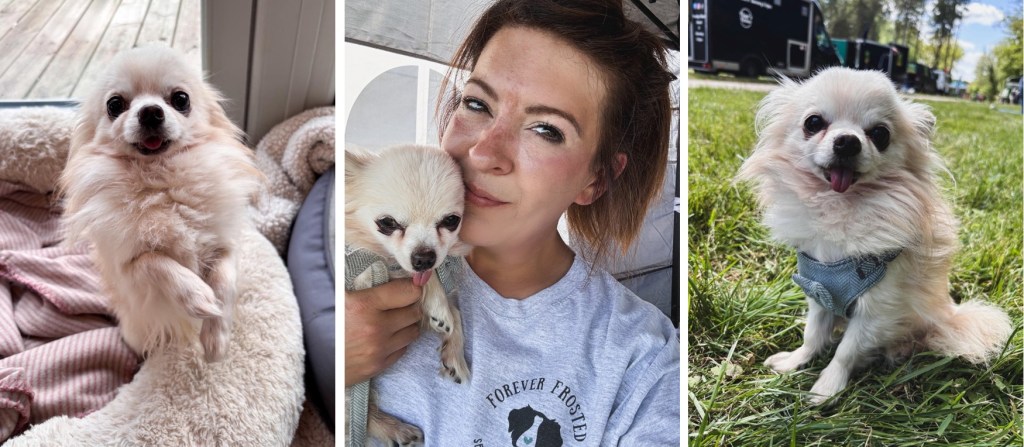
Visit our Rescues page for information on rescues, sanctuaries and organisations that specialise in the adoption of senior dogs across the UK including Senior Staffie Club, The Oldies Club and Forever Frosted Senior Dog Sanctuary.

When It’s Time To Say Goodbye

by Linda Goodman …

It’s what every dog lover dreads. Making the decision to say goodbye to your best friend is a difficult and often harrowing experience. It’s also your greatest responsibility and a final act of kindness to your loyal companion.

When I was younger, I used to believe that it had to be an emergency situation to make the decision to call the vet and have my dog euthanised. I think this is how a lot of people feel. There are others who just ‘hope’ that their best friend will go in their sleep, so they don’t have to make that awful decision. Sadly, it is very rare for this to happen and can often mean unnecessary suffering for their dog. We can hang on to our best friends for too long because we just can’t bear to make the decision to say goodbye to them. But we don’t have to wait until the 11th hour, nor should we wait until it’s an emergency decision.

Whether you decide to have an at-home euthanasia or at the vet’s surgery is a very personal one. There is no right or wrong way to do it and there are pros and cons to both. For example, you might want your dog to be at home, surrounded by family and friends in a familiar setting. It can be less stressful for all involved. This is usually a good call if your dog doesn’t have any serious underlying health conditions. If they do, it can be best to have it done at the vet’s surgery, just in case there are any complications, because they’ll have all the necessary help and equipment if needed. In the case of an emergency, always go straight to your veterinary surgery.

Back in the day, long before the pandemic and the dramatic increase in the UK’s dog population, vets had more time to schedule at home appointments. Today there just aren’t enough vets and too many pets to accommodate this. However, there are mobile vets who are set up to specifically cater for at home euthanasia, even if you’re not one of their clients. I would recommend doing a search online, long before you need such a service, to see if there’s one in your area, and keep their number handy. When it was time to say goodbye to my best friend, Teddy, I chose to have a mobile vet come to the house.

When is the right time?

How you make the decision that the time is right comes down to a number of factors, which can include whether your dog has stopped eating, can’t stand up, or doesn’t want to get out of bed. If they’re in pain they may be shivering. It all comes down to whether their quality of life is no longer good enough and they’re suffering as a result. No dog lover wants their dog to suffer, ever, but these are often the only way for a person to tell whether it’s time. Sometimes just looking your dog in the eyes will be enough to know that they’re ready to go. If you’re ever in doubt, ask your vet what they would do if this was their dog. They’ll give you an honest answer.

Today, I live by the premise ‘better a day too soon than a minute too late’, and as hard as it is, and however much you question whether your buddy can live to fight another day, it’s far kinder to let them go before it becomes an emergency.

How euthanasia is done

For a first-time dog owner, the process of euthanasia can be frightening as well as upsetting. The fear of the unknown can cause major anxiety, which is why I want to explain the process so that you’re better prepared.

The vet will firstly examine your dog to confirm whether it’s time. They will then shave an area of the front paw, or perhaps even a back leg if your dog’s blood pressure is low. If your dog is very distressed, they may suggest administering a sedative first. They will then leave you with your dog for around five minutes for it to work. Your dog will become very sleepy, and the vet will then insert a canula into a vein, which is how the euthanasia drug will be administered. The drug itself is basically an overdose of an anaesthetic called pentobarbital, which can be coloured yellow, pink, or blue.

They will then ask you if you’re ready. If your dog is small, hold them close in your arms so that the last thing they feel, smell, and hear, is you. If your dog is big stroke their head and speak to them in low soothing tones as they gently fall asleep. Try really hard to contain your emotions so that your dog doesn’t pick up on your stress and sadness. You will feel their body become heavy and limp as they become unconscious. The vet will then use a stethoscope to listen to their chest and confirm that their heart has stopped beating. Once your dog has passed, the vet will leave you with them for a short time so that you can say goodbye. Please also be aware that as your dog passes away, they may urinate or defecate so if you’re holding your dog, it might be best to have a blanket or towel on your lap just in case.

In the vast majority of cases euthanasia is swift and apart from being terribly sad, is non-eventful. On very rare occasions, your dog may let out a final moan or even a howl, but it’s important to understand that this doesn’t mean that your dog is in pain or is feeling distressed. It is an involuntary reaction as your dog is passing away. Even though your dog’s heart has stopped and they have died there can also, on rare occasions, be something called ‘agonal breathing’, which may appear as if your unconscious dog is gasping for breath for a few seconds. Please be reassured that this is, once again, an involuntary physical reaction and your dog has no consciousness of this. If one, or both, of these things happen when you’re saying goodbye to your best friend it can be terribly upsetting to watch, but it is a very rare occurrence. Of all the dogs I’ve had euthanised, and there have been too many, this has only happened to me once and, as experienced as I am at losing my buddies, I’ll admit I felt shaken to my core. As humans, we automatically associate a dog’s howl as being from pain and a gasp for breath appearing to be from suffocation. Thankfully, neither of these is true for a dog during euthanasia. Rest assured you have made the right decision, at the right time. It’s vital that you don’t harbour any feelings of regret about letting your beloved dog go. That’s what love is.

Once the vet has confirmed that your dog has passed away, this is when the floodgates open and your emotions may take over. It’s a monumental loss and it’s only natural for this to happen, sometimes through the sheer relief that your dog is no longer suffering. But for others, they can feel like they’re in a daze and the reality takes more time to process. Both reactions are perfectly normal.

Cremation or burial

It’s important to note that before your dog is put to sleep the vet will ask you what your wishes are for their remains. Please don’t be angry about this. As much as it seems a heartless thing to bring up while your dog is still alive, vets know that once your dog has died, your emotions will take over and making an important decision like this will be so much harder for you.

If you decide to have your pet cremated, they will ask you if you want their ashes returned to you, and how you wish them to be housed, such as in a box with a brass plate, or in a ceramic jar. Many people find it incredibly comforting to have their dog’s ashes with them. Some people like to spread their dog’s ashes in a place where their best friend loved to walk. For others, just having them at home is enough. If you haven’t already thought of this, please do speak with the vet about having some of their fur which can be made into jewellery and ask for a pawprint which you can frame or even decide to get a tattoo of.

I’ve lost so many dogs over the years that I have a wooden chest full of little boxes with brass plaques on them. They travel with me from home to home and I have it written into my will that when I die, I want all of their ashes to be scattered with mine. It may sound a bit strange for someone who isn’t religious, but I am spiritual, and I find it comforting to think that all of our ashes will be united at the end of my life. Of course this won’t be for everyone, so you might find you get closure from scattering your beloved dog’s ashes in their favourite place, or you might just want to keep them in your home.

In the early days, I used to bury my dogs in the garden of our house, but what I quickly discovered was that when we moved home, I felt a sudden tug at my heart at leaving them behind. From then on, I always had my dogs cremated.

Grieving for your best friend

When your dog has passed and is no longer with you, life can feel very strange. Your home can feel empty, your heart is broken and nothing feels right. That’s the price we pay for loving and losing our animal friends. If you can say to yourself that your dog lived their best life with you, and that you showed them love and affection and looked after their needs while they were with you, then try and find some comfort in this.

The sense of loss of losing a much-loved dog can be overwhelming. Don’t be afraid to talk about your grief to friends and family members. Grieving for an animal is nothing to be ashamed of, it just shows how much you loved them. I know many people who have grieved more for a lost dog or cat than they have for a family member.

If, after a while, you find that you are just not coping with your loss, reach out to one of the professional pet bereavement services that are available. Some charities offer this service free of charge, and it can really help to talk to someone who completely understands how you’re feeling.

You can never replace a lost love

Every dog is unique and it’s impossible to replace a dog you’ve lost. Even if they look identical, their personality will be completely different. Many people swear they will never have a dog again because losing them is just too painful. That’s a completely normal reaction.

For others, the decision isn’t as clear cut. This is especially true if you have more than one dog and the dog that’s left behind is grieving for their buddy. When my yellow lab, Cariad, lost her best friend Boomer, a seventeen-year-old golden retriever, she took to her bed for three weeks, lost interest in food and didn’t want to go out for walks. It was heartbreaking to see her grief and it became clear that she was going to struggle being an only dog. Suddenly my own grief at losing Boomer paled into insignificance. So, I made the decision to adopt a companion for her. I chose another golden retriever who was seven years old called Amy. The difference this made was phenomenal. Cariad’s spirits were lifted, and the two girls very quickly became best friends.

The point is, that if you’re anything like me, life without a doggie companion is just unthinkable. In my youth, I used to wait at least a year to adopt another dog, thinking that it was disrespectful to the memory of my lost friend to act sooner. But I no longer feel this way. There are thousands and thousands of dogs in rescues across the UK waiting patiently for a forever home. So, if you decide to adopt another dog even if it’s just a few weeks after losing yours, just know that you’ll be doing a wonderful thing for that dog and for yourself. As much as we think we’re rescuing a dog, more often than not, it’s the dog that is rescuing us.

In memory of your best friend

Something many people find comforting is to have a lock of their dog’s fur to place in a locket, or to have their pawprints framed with a favourite photo. To help with this we’ve included a Memorial Keepsakes page on our website. We have purchased many of these keepsakes for ourselves and our friends.

Whatever you decide to do, however you decide to do it, and whenever the time comes, the greatest act of love you will ever give your dog is to help them to go peacefully and with dignity.

Meet Shacks: Off-Grid Holidays That Put Dogs First

A guest blog from Shacks

When it comes to holidays, most of us want the same thing our dogs do: fresh air, space to roam, and a big dose of freedom. That’s where Shacks comes in. Shacks are off-grid stays in some of the UK’s most beautiful wild spots – cabins designed to help you slow down, embrace nature, and enjoy life’s simple pleasures. And best of all? They’re built with your dog in mind.

Why Shacks Are a Dog’s Dream

At Shacks, dogs aren’t just tolerated – they’re celebrated. Your four-legged friend is welcome everywhere, including the bed (because let’s be honest, no holiday is complete without morning cuddles).

Each cabin is kitted out with the little things that make travelling with pets stress-free: water bowls, towels for muddy paws, and the option to add on a Dewkes dog hamper filled with natural, sustainable treats. It’s a partnership rooted in shared values – caring for dogs in the same way we care for the planet. Many cabins also feature enclosed outdoor areas, so your dog can sniff, explore and stretch their legs safely while you sip your coffee and take in the view.

You can see our most dog friendly cabins HERE

A Growing Demand for Dog-Friendly Travel

It’s no surprise Shacks has made dogs a priority. Since the Covid-19 pandemic, the UK has seen a huge rise in pet ownership – over 3.2 million households welcomed a new pet during lockdown, with dogs leading the way. And now that we’re travelling again, more owners want to bring their pups with them: research shows 85% of holidaymakers would prefer to staycation with their pets rather than travel abroad without them.

Shacks has felt this shift first-hand, with pet-inclusive bookings continuing to rise year on year. Their cabins are designed not just to allow dogs, but to welcome them wholeheartedly.

A Holiday for the Whole Pack

Dog-friendly shouldn’t mean “making do.” It should mean freedom for the whole family – wagging tails included. And that’s exactly what Shacks offers: wild, off-grid escapes where you and your dog can switch routine for adventure, screens for starlight, and kennels for cuddles under the covers.

So, if you’re planning your next staycation and want somewhere your dog will love just as much as you do, Shacks might just be the holiday you’ve both been waiting for.

Because holidays are better with muddy paws and happy snores.

What Colours Can Dogs See?

by Linda Goodman …

First the science bit. Whilst we humans have three types of cones in our eyes, our canine friends only have two, that’s about 20% of the cones in human eyes. It’s the cones that allow us to see colour. So, dogs have what is called dichromatic vision, which is a bit like humans who have red-green colour blindness.

Now, while humans have more cones allowing us to see more colours, dogs have more rods, which gives them the edge over us when it comes to seeing in dim light and detecting movement because rods cells in their retinas are what’s responsible for identifying moving objects. They also have larger pupils than us, which enhances their night vision. It’s also the reason that dogs eyes can appear to glow in the dark or when you take a picture of them using a flash. There has even been some research which suggests that dogs could also be able to perceive ultraviolet light.

But back to the colours dogs can see. Dichromatic vision means a dog has a limited colour spectrum and can only see shades of grey, brown, yellow, and blue. For example, reds and oranges may appear as a shade of yellow whereas greens may even appear white. They may also struggle to discern different hues of the same colour such as light blue and dark blue.

Another interesting fact about canine vision is that their visual sharpness is believed to be 50% less than ours, which is why they rely so strongly on their sense of hearing and smell. It is believed that most dogs have 20/75 vision as opposed to our 20/20 vision. This makes them near-sighted which means they can see objects up close better than those further away.

In daylight, things look blurrier to dogs because their visual sharpness is 50 percent less than a human’s. And did you know that dogs are also near-sighted? This means they see objects that are up closer to them a lot better than those that are further away. Luckily dogs have a heightened sense of smell and hearing and rely heavily on these for perception.

When it comes to the accessories we choose for our dogs to wear like collars, leads, harnesses, coats, and jumpers, we choose these because we like them. A dog doesn’t care about the colours we choose for those things. But when it comes to training and playing, colour matters. For example, your dog may struggle to make out a red ball on green grass, but would be able to see a blue or yellow ball. They are also more likely to be attracted to toys that are blue or yellow. So, if you’ve ever seen your dog struggling to find a toy it might be down to them not seeing that toy clearly, rather than lack of interest.

When making choices for your dog, it’s important to understand how they see and experience the world around them in order to meet their needs. So, the next time you’re choosing a dog bowl or new toy for your best friend, make life easier for them by considering something blue or yellow!

Why Has My Dog Got Itchy Ears?

Blog by Emma Head of Brand at Itch

Is your dog constantly scratching at their ears, shaking their head or scraping their head against the floor? If so, your dog’s ears are bothering them and they need some help! Itchy ears are a common problem, but it’s not always an easy fix and can be a sign of more serious issues. Keep reading to find the best treatment for your dog’s itchy ears.

Causes of itchy ears in dogs

Itchy ears in dogs can result from a variety of issues. Here are the most common culprits:

Ear mites – Tiny parasites like ear mites are a frequent cause of itching, especially in puppies. These microscopic pests feed on wax and oils in your dog’s ear canals, causing severe irritation. If your dog’s ears have a dark, crumbly residue resembling coffee grounds, mites might be the issue.

Allergies – Just like us, dogs can suffer from allergies. These might be triggered by food, pollen, mould, or household products. Allergies often result in red, inflamed skin and chronic itching, including around the ears.

Infections – Bacterial or yeast infections are another leading cause. These infections thrive in warm, moist environments, making your dog’s ears the perfect home. Signs include redness, swelling, a foul smell, and discharge.

Foreign bodies – A rogue bit of grass seed or debris lodged in your dog’s ear can be highly irritating. You might notice sudden scratching or head-shaking.

Poor ear hygiene – Some breeds with floppy ears, like Spaniels or Basset Hounds, are more prone to build-up of wax and dirt, which can lead to itching if not cleaned regularly.

Longer term issues of itchy ears

While a bit of scratching might not seem alarming, untreated ear problems can escalate quickly. Here are some potential complications:

Chronic ear infections – If infections aren’t treated promptly, they can become recurrent or chronic, causing long-term damage to the ear canal and eardrum. This might even affect your dog’s hearing.

Haematomas – Excessive head shaking can cause blood vessels in the ear flap to burst, leading to a painful swelling known as an aural haematoma. This often requires surgical intervention.

Behavioural changes – Persistent discomfort can make your dog irritable, withdrawn, or even aggressive, especially when their ears are touched.

Spread of infection – Left untreated, ear infections can spread to the middle and inner ear, potentially causing balance issues, facial paralysis, or other severe health problems.

How to treat itchy ears

If your dog’s ears are bothering them, it’s important to act quickly. Here’s how to address the issue:

Visit Your Vet – The first step is to determine the cause. Your vet might examine your dog’s ears with an otoscope, take swabs for analysis, or even recommend allergy testing. They’ll prescribe the right treatment, whether it’s medicated drops, antibiotics, or antihistamines.

Clean The Ears – For minor issues, cleaning your dog’s ears can help. Use a vet-recommended ear cleaner, like the Itch Ear Cleaner for dogs. Squirt the cleaner into the ear canal, massage the base of the ear, and let your dog shake it out. Wipe away debris with the cotton wool (don’t use cotton buds).

Treat The Underlying Problem If allergies are to blame, your pooch might need dietary changes or anti-allergy medications. For mites or infections, specific treatments are required to eradicate the problem.

Avoid DIY Remedies – It’s tempting to try home remedies, but some can do more harm than good. Always consult your vet before applying anything to your dog’s ears.

How to prevent itchy ears

Prevention is always better than cure. Here are some tips to keep your dog’s ears itch-free:

Regular ear checks – Get into the habit of checking your dog’s ears weekly. Look for redness, swelling, or unusual odours. Early detection can save a lot of discomfort.

Clean ears as needed – Dogs with floppy ears or those who swim frequently might need regular cleaning. Use a gentle cleaner like the Itch Ear Cleaner for dogs once a week to keep them free of infection and mites.

Keep ears dry – After baths or swims, make sure to dry your dog’s ears thoroughly to prevent moisture build-up.

Maintain a healthy diet – Good nutrition supports overall health, including the skin and immune system. Try the Itch Skin & Coat treats for dogs which support sensitivities in your pet’s skin. If allergies are a concern, consider a hypoallergenic diet.

Regular grooming – For breeds prone to ear problems, regular grooming can help. Trimming hair around the ears and keeping the ear canal clear reduces the risk of wax and debris build-up.

Let’s wrap it up!

Itchy ears can be frustrating for both you and your dog, but with the right care and attention, they’re easy to manage. With your pooch’s interest at heart, it’s always best to use preventative care to keep them happy and healthy.