Why Has My Dog Got Itchy Ears?

Blog by Emma Head of Brand at Itch

Is your dog constantly scratching at their ears, shaking their head or scraping their head against the floor? If so, your dog’s ears are bothering them and they need some help! Itchy ears are a common problem, but it’s not always an easy fix and can be a sign of more serious issues. Keep reading to find the best treatment for your dog’s itchy ears.

Causes of itchy ears in dogs

Itchy ears in dogs can result from a variety of issues. Here are the most common culprits:

Ear mites – Tiny parasites like ear mites are a frequent cause of itching, especially in puppies. These microscopic pests feed on wax and oils in your dog’s ear canals, causing severe irritation. If your dog’s ears have a dark, crumbly residue resembling coffee grounds, mites might be the issue.

Allergies – Just like us, dogs can suffer from allergies. These might be triggered by food, pollen, mould, or household products. Allergies often result in red, inflamed skin and chronic itching, including around the ears.

Infections – Bacterial or yeast infections are another leading cause. These infections thrive in warm, moist environments, making your dog’s ears the perfect home. Signs include redness, swelling, a foul smell, and discharge.

Foreign bodies – A rogue bit of grass seed or debris lodged in your dog’s ear can be highly irritating. You might notice sudden scratching or head-shaking.

Poor ear hygiene – Some breeds with floppy ears, like Spaniels or Basset Hounds, are more prone to build-up of wax and dirt, which can lead to itching if not cleaned regularly.

Longer term issues of itchy ears

While a bit of scratching might not seem alarming, untreated ear problems can escalate quickly. Here are some potential complications:

Chronic ear infections – If infections aren’t treated promptly, they can become recurrent or chronic, causing long-term damage to the ear canal and eardrum. This might even affect your dog’s hearing.

Haematomas – Excessive head shaking can cause blood vessels in the ear flap to burst, leading to a painful swelling known as an aural haematoma. This often requires surgical intervention.

Behavioural changes – Persistent discomfort can make your dog irritable, withdrawn, or even aggressive, especially when their ears are touched.

Spread of infection – Left untreated, ear infections can spread to the middle and inner ear, potentially causing balance issues, facial paralysis, or other severe health problems.

How to treat itchy ears

If your dog’s ears are bothering them, it’s important to act quickly. Here’s how to address the issue:

Visit Your Vet – The first step is to determine the cause. Your vet might examine your dog’s ears with an otoscope, take swabs for analysis, or even recommend allergy testing. They’ll prescribe the right treatment, whether it’s medicated drops, antibiotics, or antihistamines.

Clean The Ears – For minor issues, cleaning your dog’s ears can help. Use a vet-recommended ear cleaner, like the Itch Ear Cleaner for dogs. Squirt the cleaner into the ear canal, massage the base of the ear, and let your dog shake it out. Wipe away debris with the cotton wool (don’t use cotton buds).

Treat The Underlying Problem If allergies are to blame, your pooch might need dietary changes or anti-allergy medications. For mites or infections, specific treatments are required to eradicate the problem.

Avoid DIY Remedies – It’s tempting to try home remedies, but some can do more harm than good. Always consult your vet before applying anything to your dog’s ears.

How to prevent itchy ears

Prevention is always better than cure. Here are some tips to keep your dog’s ears itch-free:

Regular ear checks – Get into the habit of checking your dog’s ears weekly. Look for redness, swelling, or unusual odours. Early detection can save a lot of discomfort.

Clean ears as needed – Dogs with floppy ears or those who swim frequently might need regular cleaning. Use a gentle cleaner like the Itch Ear Cleaner for dogs once a week to keep them free of infection and mites.

Keep ears dry – After baths or swims, make sure to dry your dog’s ears thoroughly to prevent moisture build-up.

Maintain a healthy diet – Good nutrition supports overall health, including the skin and immune system. Try the Itch Skin & Coat treats for dogs which support sensitivities in your pet’s skin. If allergies are a concern, consider a hypoallergenic diet.

Regular grooming – For breeds prone to ear problems, regular grooming can help. Trimming hair around the ears and keeping the ear canal clear reduces the risk of wax and debris build-up.

Let’s wrap it up!

Itchy ears can be frustrating for both you and your dog, but with the right care and attention, they’re easy to manage. With your pooch’s interest at heart, it’s always best to use preventative care to keep them happy and healthy.

Why Home Boarding and Pet Sitting Are Great Options

A guest blog by Emma Cornelius – We Love Pets – Bridgend

Every dog owner wants the best for their furry friend, and while kennels have historically been a common option, more pet parents today are choosing a different way, and for good reason! Here are great options for you and your best friend.

  1. Home-boarding – where the dogs come and stay in our homes.
  2. House-sitting – where we go and stay in the dog’s home through the day and night.
  3. Pet-sitting – where we sit with your pets from 1 hour to a couple of hours at a time.

All of these services ensure dogs always feel comfortable, secure and well cared for.

Kennels vs. Home-Boarding – A Quick Comparison

Here’s a simple breakdown of why home-boarding is a better choice for most dogs:

FeatureKennelsHome Boarding
RoutineDisrupted scheduleStays consistent
CareStaff managing multiple dogsOne-on-one attention
Stress LevelsCan be noisy and overwhelmingCalm and familiar environment
Health RisksHigher risk of illnesses like kennel coughReduced risk due to controlled socialisation
SocialisationLarge groups, which may be intimidatingSmaller, controlled interaction
Home ComfortSterile environmentCosy, personalised care

A Better Alternative

Dogs thrive on routine, and sudden changes can be unsettling for them. With home-boarding, house-sitting, or pet-sitting your dog can stick to their usual schedule—whether it’s mealtimes, walks, or play sessions—without disruption.

Unlike kennels, where staff must juggle the needs of numerous dogs, we offer one-on-one care. This means tailored attention to ensure your dog’s unique physical and emotional needs are met. If you’re happy for your dog to mix with other dogs we can home-board dogs from more than one household, but never more than 2-3 dogs at a time from different households.

Kennels can also be noisy and overwhelming, whereas home-boarding and house-sitting provides a calm and nurturing environment. Imagine for a moment that you are a dog. Scenario One: Your family is going away, which can be stressful in itself. Then you’re shipped off to a kennel full of other stressed-out dogs, barking and crying. You have a bed, some toys, a water bowl and every now and then you’re let out for exercise. OR Scenario Two: Your family is going away and someone who loves dogs comes to your home and stays with you while they’re gone. So much less stressful for your best friend who remains surrounded by familiar sights and smells, and their routine remains the same. Dogs staying in a familiar home setting feel more secure and relaxed. Or your dog can stay with a home-boarder and enjoy the comforts of a home setting.

Another benefit is that kennels can expose dogs to a higher risk of contagious illnesses, such as kennel cough. Home-boarding and house-sitting minimises this risk by avoiding large groups of dogs in shared spaces.

Dogs staying in a home environment can still enjoy social interaction, but in a controlled and comfortable setting. Whether it’s spending time with a trusted sitter or socialising with a small group of dogs, they won’t feel overwhelmed.

House-Sitting or Home-Boarding?

It’s worth considering that if your dog has any addition needs because they’re deaf, blind or suffering from severe separation anxiety, it’s always more beneficial for them to be cared for in their own home.

If you’re going away and don’t want someone to house-sit with your dog in your own home, home-boarding allows your dog to stay in a warm, welcoming and dog-friendly home environment, rather than a sterile kennel. They receive affection, companionship, and a cosy place to rest, just like they would at home.

Dogs can follow their regular walking, feeding, and sleeping schedules, making the transition seamless and stress-free.

Ideal for Older Dogs or Dogs with Health Issues

Whether your dog is a senior, set in their ways and doesn’t like their routine disrupted, or they have health issues that require medication and constant monitoring, house-sitting or home-boarding ensures their needs are met with care and patience.

And there’s a science behind the benefits too! Veterinary professionals and dog behaviourists agree that a familiar environment plays a significant role in a dog’s wellbeing. According to pet care specialists, dogs experience lower cortisol levels (stress hormone) when staying in a familiar home setting rather than an unfamiliar kennel.

Real-Life Testimonials

“We have been using We Love Pets for over 12 months. They are fantastic and Molly loves them! She gets really excited when she hears them arriving and she is worn out for the day after her walk. We have recently used the overnight boarding for a weekend and it worked really well. It was a home from home for Molly which is exactly what we wanted. I would highly recommend this dog walking service and Boarding. — Tony

“I’ve had the pleasure of using We Love Pets – Bridgend services for our dog Hudson, and I cannot recommend them highly enough! Their team is incredibly helpful and flexible, always ready to assist with walking Hudson, whether it’s a last-minute request or an overnight stay. It’s such a relief to know that he is in good hands. What really sets We Love Pets – Bridgend apart is their commitment to communication. We always receive updates and adorable pictures of Hudson during his walks on the same day, which brings us peace of mind and joy as we see him having fun. Their genuine love for pets shines through in everything they do. If you’re looking for a reliable and caring service for your furry friend, look no further than We Love Pets. They truly live up to their name and make pet care a breeze!” — Sion

The Benefits of a Dog Walker

If you don’t work from home, chances are that you have to leave your dog alone at home for a number of hours. Your life may be very busy with other commitments like getting the kids off to school, or perhaps you have to leave very early to commute to work. This doesn’t leave much time for ensuring that a dog has the mental stimulation they crave or the physical exercise they need. Dogs get bored, so a great way to break up the monotony of their day is to have a dog walker come and take them out for a stimulating walk while you’re at work. Depending on your budget you can choose to do this every day or several times a week.

Final Thoughts

If you want a stress-free experience for your dog while you’re away for a few hours to a few weeks, house-sitting, home-boarding and pet-sitting are your best options. They provide personalised care, a familiar routine, and a loving environment, ensuring your dog stays happy and healthy.

At We Love Pets Bridgend, we pride ourselves on offering professional, compassionate, and reliable pet care. Whether you need a trusted sitter or a loving home for your dog while you’re away, we’re here to help!

📍 Find out more: We Love Pets Bridgend

📞 Book a Consultation Today – Give your dog the best care possible!

e: bridgend@welovepets.email | t: 07757227393

To Throw or Not to Throw? Ball Throwing Explained

A guest blog by Jemma Cooper BSc RVN DipAniPhys RCH MIAAT MCHA …

Many dogs get a great deal of pleasure from chasing a ball, and many owners undoubtedly get a lot of joy from throwing a ball and watching their dog having fun. What many people don’t realise is that this activity isn’t as beneficial as it may seem.

Often you hear veterinary and animal rehabilitation professionals telling owners that ball throwing is not an ideal activity for their dog, particularly arthritic or injured patients. In fact, it could be said that it is not an ideal activity for any dog, whatever their age or condition. Ball throwers are an item easily purchasable at most pet shops and an easy way for owners to think their dogs are going to have a ‘good run’ or ‘burning off some excess energy’. But what are the effects physically and mentally of such a driven, high impact activity?

The Throw!

So, when we throw the ball for our dog – what exactly happens?

• Firstly (if our dog is facing us) we ask our dog to turn on a sixpence to face a different way, often twisting and putting all their weight on their hindlimbs in an uncontrolled manner.
• We then ask our dog to go from virtually standing or twisting round, to a gallop.
• The dog then brakes sharply, often skidding on the underlying surface, throwing their neck back initially and then bringing all their weight forward as they reach for the ball.
• Sometimes they jump to catch the ball in mid-air, often twisting at the same time.
• Then we ask them to land, turn again and gallop back to us, often skidding to a halt at the end, extremely happy with themselves that the caught the ball in record time.

When broken down and taking the ‘fun’ out of ball throwing, we can actually see that we’re asking our beloved dogs to be an explosive weightlifter to propel them forwards, a 100m sprinter, a sniper to be able to keep their eye on the ball, an acrobat and a ballerina all in one! In summary, chasing a ball combines sharp acceleration, high speeds, rapid and uncontrolled deceleration that includes rotatory forces on fundamentally unstable joints. In addition, this activity is usually repeated over and over again.

Now for the nitty gritty…

The forces on a dog’s skeleton and muscles are enormous throughout this process. If a dog increases speed through the chase, it can as much as double the forces generated at either end. It is said that the most dangerous component of ball chasing occurs during the braking process and is often responsible for shoulder and carpal (wrist) injuries. Repeated micro-trauma to muscles and cartilage is the cause of long-term damage and that the older a dog gets, the more likely it is to be carrying small injuries.

The Physical Effects:

To understand why dogs should not chase balls, it’s necessary to understand a little about the musculoskeletal system of the dog as well as the mechanics behind their movements. Muscles and joints are prone to trauma during high energy activities. The explosive action that the dog undertakes to chase in a sudden moment uses powerful propulsive forces. The same forces used to initiate this high-speed activity are experienced in reverse when suddenly breaking and landing is necessary. Unpredictable actions involved in these strenuous actions can result in muscles and joints being put under great stress for which they aren’t designed or weren’t prepared.

The dogs fore and hind limbs are developed to fulfil specific functions as a quadruped. The hind limbs act as the power, house for the dog, propelling them forward. Power is transmitted from the back legs along the spine to obtain the forwards motion, which ranges anywhere from the dog stepping underneath themselves to go from stand to walk, to both hindlimbs flexing underneath the body as far forwards as physically possible for the dog, to them push backwards to explosively drive forwards. This is also the same situation when jumping, increasing their flexion through the hindlimb to push them selves up and reach with their forelimbs.

Whereas the forelimbs act predominantly as the braking and shock absorbing system for the dog when performing high impact exercise. To allow dogs to move efficiently by taking long strides, they have sacrificed the same stability that we have through their shoulder joints. A dogs’ front limbs have no bony attachment to the skeleton. The thoracic sling is the group of muscles that attach the forelimb, but at the same time of being responsible for the movement and stability of the forelimbs and bearing most of the dog’s weight. Dogs carry about 60% of their weight through their front legs and 40% through their hind legs, with their centre of gravity being just behind the forelimb (girth area). Therefore, when chasing a ball, jumping, biting the ball, and then landing, with quick turns and uneven movements, the pressure and weight exuded through the forelimbs is large and has the potential to be detrimental.

The Physical Effects on Dogs with Ailments:

A common problem in dogs is that they lose hindlimb strength through many reasons – general aging process, arthritis, injury, meaning more weight again is taken onto the forelimbs while the dog throws the weight forwards onto the forelimbs in compensation for the ailment. This again adds even extra force to the forelimbs before beginning any high energy activities.

Dogs have a fantastic ability to subtly offload weight, which means they can easily compensate when first dealing with a minor injury. Dog owners don’t typically notice this subtle transfer of bodyweight and the development of muscular imbalance, so the ball throwing continue, as does the opportunities for further damage.

Once the dog has started to compensate, these overworking tissues are more likely to get damaged in these high impact activities. Sadly, we often find that the owners can misinterpret their dogs compensated overdeveloped muscles as a sign of health, not realizing that other areas of the dog’s body have correspondingly decreased in mass, mobility, strength and function. Eventually this ability to compensate so well fails. The compensatory areas themselves become tense and painful but by this stage, we have multiple areas of concern.

A Dogs Ability:

There are many factors that can also affect the dogs’ ability to perform high energy exercises and the impact these can have on their body. These include conformation, ailment (known or unknown), behaviour towards the activity, the dog’s fitness, body condition score and weight.

Over the years, we have influenced the form of our dogs to change their function. While dogs no longer need to hunt down prey or run from attackers, humans have bred them for our own purposes. It is not hard to see that this species has a huge diversity of form, from the sledding breeds or collie types who have muscles designed to work at a steady speed over long distances, to greyhounds who have muscles that work efficiently for short sharp bursts of speed. It must be considered the fact that certain breeds of dog were bred to serve a specific purpose and have subsequently adapted to do so, while others were bred for pleasing aesthetics and conformational extremes. This means we see significant differences in power, strength, and athleticism among different breeds, and even within breeds when looking at the individual.

The Greyhound, for example, is a sprinter, muscular, with light, yet long bone structure, higher red cell concentration, and less body fat per kilogram mass than any other breed. This allows for efficient delivery of oxygen to organs and muscles while minimizing load and impact in joints, meaning they have specialized musculoskeletal systems for sprinting.

The turning and uneven, explosive forces on the limbs when throwing a ball

The Collie has a greater range of motion in all joints than healthy Labradors, while also being lighter on their feet with reduced stance phase of locomotion. This allows them to drop and revert from their herding pose rapidly to catch stray sheep!

On the other hand, Dachshunds and Basset Hounds have a significant disproportion between limb (very short) and back length (very long), resulting in decreased core stability, short strides, and an inclination to experience intervertebral disc disease.

We must take into consideration how fit a dog is to be performing such tasks. Any excess weight on your dog will add in the above factors of forces down the limbs and excessive loading. It is also assumed that an overweight dog is generally not as fit as an active dog of an ideal weight, resulting in tendons, ligaments and muscles that aren’t as strong and flexible as they could be to cope with high impact exercise.

The Behavioural Effects

Ball throwing is an activity that many dogs and owners engage in on a regular basis. In recent years, concerns have been raised about not only the physical effects but the mental impact this can have on dogs.

Many dogs get overly excited during ball games. This increased arousal can lead to an increased heart rate and adrenaline levels, causing an increase in cortisol levels, and can lead to ‘erratic’ behaviours as a result of reduced impulse control and frustration tolerance (Canine Arthritis Management, 2024).

Adrenaline is designed to be released in short bursts, as a one-off (such as in the wild if a dog is chasing prey) to kick start the flight or fight response. By repeatedly throwing the ball and initiating a chase, this means adrenaline is released for much longer periods. Cortisol levels take several days to return to normal after peaking, and studies have found that prolonged exposure to high cortisol levels can be damaging to long-term health.

Adrenaline and cortisol both play a role in the expression and regulation of behaviour. Living with increased levels over a long period of time can be responsible for a few problematic and dangerous behaviours, including your dog’s inability to ‘switch off’, cope with challenging situations and even show more aggressive behaviour. Considering one of the main reasons people throw balls for their dogs is to tire them out, it can be hugely counterproductive when their adrenaline and cortisol stay high following the exercise, meaning they can’t settle or relax. Also due to this, it can increase the likelihood of them chasing after another dog in the moment, or after ball play and can increase reactivity in some cases.

The over exertion on the neck going back to catch, twisting of the body and impact on landing of a ball throw

So, is it never safe to throw a ball?

It’s very difficult when presented with this question, as usually associated with this, is a ball loving dog who’s just waiting for it to be thrown. It is always recommended that if your dog has an injury or ailment that ball throwing shouldn’t be performed. However, if you do want to throw a ball, here are some suggestions to abide by:

• Never throw a ball for a dog who is injured or has arthritis – this will only exacerbate the problem.
• Only throw a ball once the dog is warmed up.
• Use a frisbee in stead of a ball as these glide down and dogs tend to slow with the speed of the frisbee
• Never throw balls on slippery floors or where it can bounce off items.
• Do not throw balls on wet surfaces, mud or unstable surfaces such as gravel.
• Throw straight and low down.
• Do not throw downhill.
• Do not throw repeatedly and keep the duration down.
• Do not throw for more than one dog at the same time – two dogs colliding while trying to jump for the same ball is a definite way to end up in the vets!

Warm up

It is sadly very normal for a dog not to be given the chance to “warm-up” correctly prior to playing ball. Warming up or low impact exercising prior to high-stress activities “prepares” them for the more explosive work and results in less damage. However, often dogs are thrown a ball as soon as they reach a field or immediately upon getting out of the car. Unfortunately, it is common sight that owners toss a ball with a ball thrower twenty times and immediately after, for the dog to then go straight back in the car without a cooldown either. It’s always advised to perform at least 5-10 minutes of warm up before performing high impacts tasks – this can be a walk, some off lead work, leading to some scent work, recall work and then introducing ball play.

So, what’s the alternative?

Tug of war:

• Playing tug with your dog is a great interactive game, and it helps them to build a much stronger bond with you compared with throwing balls. It can be performed in a controlled manor, and lots of reward (and wins) allows them to demonstrate their predatory nature and harks back to them catching and tearing apart their prey.

Scent games:

• Toss some treats in the grass and let your dog sniff them out.
• Teach them to find their favourite toy (can be a fabulous way to put the beloved ball to use).
• Scent work like ‘Man Trailing’ is very mentally stimulating and great fun for both owner and dog.

Running tricks:

• Teach your dog to run around a tree and grab a toy out of your hand on his way back towards you.
• Another great running alternative is practising recalls from a stay!

Training Activities:

• Practice some recall skills, obedience skills, teach your dog new tricks or behaviours that will enrich your time spent together. Spend some quality time also doing a couple of fitness exercises during your walk outside and help with improving overall body condition.

In summary, there are many reasons why ball throwing for dogs can be detrimental. The negative physical and mental impact, both long and short term, far outweigh the positive; most of which are only experienced by the dog in the “high” of the moment. It is never the wish of the vet, rehabilitation specialist or behaviourist to deprive dogs of a fun-filled life. The goal is to make people more educated and aware about activities that can be detrimental to their dogs.

References:

Bockstahler, B., Levine, D., and Millis, D.L., (2004) Essential Facts of Physiotherapy in Dogs and Cats, Babenhausen, Germany

Canine Arthritis Management, 2024. www.caninearthritis.co.uk

Millis, D.L., and Levine, D., (2014). Canine Rehabilitation and Physical Therapy – Second Edition, Elsevier Inc, UK

Polite Paws Dog Training, 2024. www.politepawsdogtraining.co.uk

Jemma Cooper BSc RVN DipAniPhys CH MIAAT

Jemma has been in the animal and Veterinary profession for over 10 years, having worked as a Registered Veterinary Nurse, before completing her physiotherapy qualification and canine hydrotherapy qualification. Jemma set up JCB Animal Physio Rehabilitation Centre in 2020 which now offers physiotherapy, underwater treadmill hydrotherapy, pool hydrotherapy and class 4 laser treatments, and has introduced two more hydrotherapists and physiotherapists to the team recently. It has always been Jemma’s passion to approach all animals in a holistic manner, closely working with Veterinary practices, and combining many different modalities to rehabilitate patients to the best her ability.

Canine Hydrotherapy: A Life-Changing Treatment More Dog Owners Need to Know About

A guest blog by Jemma Cooper BSc RVN DipAniPhys RCH MIAAT MCHA …

When most people think of hydrotherapy, they either think of elite human athletes recovering from injuries, or cold-water swimming and ice baths. But did you know canine hydrotherapy can also be an huge game changer in dogs?

As canine hydrotherapists, we’ve seen directly how this hydrotherapy can dramatically improve the health, mobility, and quality of life for our four-legged friends. Yet, despite its growing success, many dog owners still don’t know that hydrotherapy is an option!

What Is Canine Hydrotherapy and its effects?

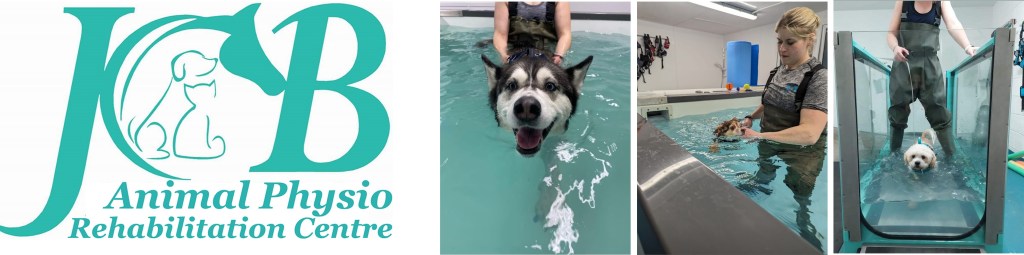
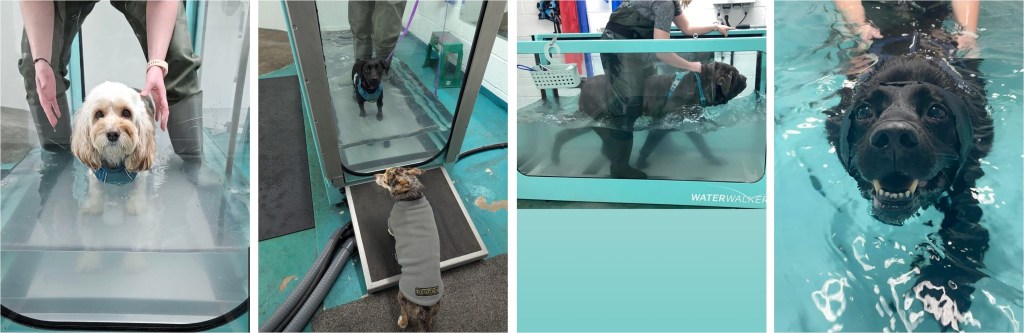
Canine hydrotherapy refers to the use of warm water to help dogs recover from injury, manage pain, or improve physical function. It takes place in a controlled environment, like an underwater treadmill or canine swimming pool, where a therapist can monitor and guide the dog’s movements.

Controlled swimming helps to improve cardiovascular stamina, muscle tone, range of movement and is particularly helpful in aiding recovery from injury or surgery whilst also improving general fitness, especially in the management of obesity. Hydrotherapy is also considered to be a natural anti-inflammatory through its ability to reduce tissue swelling.​​

Hydrotherapy in conjunction with veterinary treatment can significantly improve the quality and rate of healing following surgery or traumatic injury. Post surgery the careful use of hydrotherapy can help with rehabilitation and increase the chance of a successful return to full fitness.

In water the heart needs to work harder in order to meet the increased demand for nutrients by all the muscles which are being worked, this sounds like hard work – it is – and that’s the idea! For most dogs a short hydrotherapy session is an extremely challenging workout. However, the buoyancy of the water and the fact that sudden twists, stops and falls are impossible makes hydrotherapy a safe and effective form of exercise. It’s also very enjoyable for most animals. Whilst immersed in water the chest is subjected to the effects of hydrostatic pressure; this means that every breath requires more effort. In particular, muscles used for breathing in have to work much harder and as muscles strengthens with exercise this improves the whole respiratory system.

Hydrotherapy is an excellent form of exercise because most of the muscles used in daily movement are involved – without the stresses caused by motion on hard ground. On land, each footfall creates a shock wave which travels up the limb and is absorbed by bones, tendons and joints. While these stresses are necessary to maintain healthy strong bone, if these shock waves are severe or repetitive they can actually damage or weaken the limb, particularly an arthritic joint or one recovering from an injury or surgery. Hydrotherapy allows the “working out” and strengthening of the muscles while avoiding this potentially damaging concussion. Due to the increased resistance of movement created by the water, the muscles have to work harder than they would do on land.

It is much more beneficial to treat dogs in heated water since cold water causes constriction of the blood vessels near the skin and to the superficial muscles (those just under the skin) which restricts the flow of blood making the muscles less efficient. Warm water increases the circulation of blood to the muscles, increasing the supply of oxygen and nutrients and flushing away waste products, leading to muscle relaxation and a reduction in pain and stiffness. Improved circulation reduces swelling around an injured area and enhances healing.

The buoyancy effect of water reduces the load on weight bearing joints which helps to reduce pain and allows easier movement and exercise. Hydrostatic pressure applied to the body in water can assist in reducing swelling, and as the pressure increases with depth this encourages fluid swelling (oedema) in the limbs to move away from affected areas, immersed lower in the water back towards the body. This is assisted by exercising the limb to enhance circulation. Buoyancy and hydrostatic pressure also help to support the body during exercise; this can aid the re-education of gait patterns in neurological conditions and reloading of a limb post-surgery.

The buoyancy of water reduces stress on joints, while its resistance provides a gentle but effective way to build strength, improve range of motion, and promote healing. Because it’s low-impact, hydrotherapy is particularly beneficial for dogs who can’t handle more traditional forms of exercise due to age, injury, or medical conditions.

Common Ailments that Hydrotherapy Can Aid or Treat

We’ve seen dogs come in for hydrotherapy for all kinds of reasons. Here are a few of the most common:

Post-surgical rehabilitation (e.g., after cruciate ligament repair, spinal surgery, or hip replacements)
Arthritis and joint issues
Hip or elbow dysplasia
Neurological conditions like intervertebral disc disease (IVDD)
Obesity and weight management
Sports conditioning for canine athletes
Age-related muscle loss and stiffness

Whether your dog is recovering from an operation or simply slowing down with age, hydrotherapy can provide a safe, effective way to regain or maintain strength and function.

The Benefits – They’re More Than Just Physical

While the physical benefits are well-documented, there’s also an emotional and behavioural side to hydrotherapy that’s just as important. Many of the dogs we work with come in stressed or fearful. Now, the first session of something completely new can always been quite daunting for them, however they quickly learn that it’s a safe place. They may have been living with pain, gone through surgery, or lost confidence in their bodies. But water has a calming, almost magical effect. It allows dogs to feel supported, to move without fear, and to experience success again. As they regain physical ability, their confidence soars as well. Owners often tell us how their dog’s personality “came back” after starting hydrotherapy. They’re not just moving better—they’re happier, more playful, and more engaged.

What to Expect in a Session: A Quick overview

Assessment: Each dog undergoes a thorough evaluation to determine the best course of treatment. We consider the dog’s condition, medical history, temperament, and goals – this involves a physiotherapy treatment along side a gait assessment, exercise rehabilitation and much more.
Tailored treatment plan: Every dog is unique, so we create a customised plan. This might include underwater treadmill sessions, swimming, stretching, and massage. This also tracks progress where we can adjust your dogs plan as needed.
The hydrotherapy consult: Your dogs heart rate, respiratory rate and gum colour will be checked on arrival to ensure they are healthy to swim. To begin – a lovely warm shower – this ensures your dog is warmed, and free from dirt that may damage our water sanitation. Your dog is then introduced slowly to the pool or treadmill, with lots of guidance and encouragement from a therapist which ensures stress levels are kept minimal. Once engaging in the task, the dogs relax and use the equipment better, getting the most out of the session.
Collaboration with vets: We often work alongside your dog’s vet to make sure everyone is on the same page and your dog receives the best care possible, reporting back frequently and rising any issues we may have.

Is Hydrotherapy Right for Your Dog?

Hydrotherapy can benefit a wide range of dogs—but like any treatment, it’s not a one-size-fits-all solution. It’s always important to consult your veterinarian before starting any new form of therapy. That said, if your dog struggles with mobility, is recovering from injury or surgery, or needs a safe way to lose weight, hydrotherapy could be a game-changer.

Spreading the Word

Despite its proven benefits, canine hydrotherapy is still relatively unknown to many pet owners. That’s why we’re passionate about sharing our knowledge and educating the public. Every week, we meet someone who says, “I wish I’d known about this sooner.” Our goal is to make hydrotherapy as common a treatment as any other form of canine care. The more awareness we raise, the more dogs can get the help they need—and the happier and healthier our pets will be.

JCB Animal Physio are located on the outskirts of Cowbridge, South Wales.

What Is a Senior Dog

by Linda Goodman

Back in the day, there was a general rule that a dog became a senior dog once they were 7 years old. But as we’ve learned more about dogs over the decades, and despite the dog food industry largely sticking with this age as a guide, we now know a lot more about how dogs age. Today, it is generally accepted that a dog is considered senior when they reach the last 25% of the lifespan that is expected for their size/breed. 

For example, giant dogs age faster than smaller dogs. So, a Great Dane could be considered senior at say 5 years old, while a Jack Russell may not be considered senior until they’re nearly 10. Of course it varies from dog to dog, and consideration must also be given to heredity, plus exercise and nutrition.

Size, weight, and breed can all help determine how quickly your dog ages. Some dogs slow down faster than others; for example, smaller breeds may stay healthy and active much longer than larger breeds.

Just like humans, dogs don’t suddenly become old overnight. It’s a gradual process, which is why it’s important to continuously monitoring your dog’s health and behaviour to watch out for subtle signs that they may be struggling to do things they once enjoyed and be prepared to adjust certain things according to their changing needs.

As dogs age, they may not enjoy walking as far as they used to or find running up and down stairs more of a struggle or enjoy chasing a ball in the park. This can be for a variety of reasons, and some of these your vet may be able to help with. Booking a wellness vet check for your senior dog should happen at least every six months to stay on top of their preventative healthcare.

Arthritis

Dogs suffer arthritis just like humans do and they may be in pain with aching hips and joints, which understandably lessens their enjoyment of being active. It’s believed that as many as 80% of dogs over the age of 8 years may be arthritic. There are a variety of supplements and medications that can help alleviate their pain and discomfort, and I highly recommend a visit to the Canine Arthritis Management website for the latest info.

Why senior dogs require different nutrition

Many decades ago, dogs of all ages, other than puppies, were fed the same food, but as the science behind canine nutrition developed, it was realised that the balance of nutrition needed by senior dogs differs to that of puppies and adult dogs. There was also once a belief that senior dogs required less protein, but today it is realised that senior dogs require more protein to negate the loss of muscle mass they experience. But here’s the problem. Senior dog food varies in its protein content, so it can be difficult to know which one to choose. Also, older dogs can have problems with their teeth or may even have fewer teeth than they did when they were younger, so eating dry food can be difficult for them. Whereas wet food takes less chewing and contains more water, which is also helpful to prevent dehydration in dogs that perhaps drink less water than they should.

Transitioning from adult to senior food must be done very slowly to avoid creating digestive issues and upset tummies. If you’re struggling to decide which senior food will be best for your dog, don’t hesitate to ask your vet for advice. There’s also a very useful website where you can check the protein to carbohydrate ratio of your brand of dog food, which you’ll find here.

Pet insurance premiums

Pet insurance companies vary in terms of how premiums rise as your dog gets older. For example, PetPlan states ‘prices do increase every year, due to the risk of illness as pets get older and the cost of vet bills increasing over time’*. Whereas Many Pets states ‘Prices are likely to increase more steeply when your pet reaches seven or eight years old. For some breeds with shorter average lifespans, prices can start to increase even younger.’** As your pet ages you can also expect a rise in the excess you have to pay before the insurance kicks in. With so many pet insurance companies offering so many variants in what their policies do, and don’t cover, and the types of policies you can choose from, it pays to shop around before deciding who to go with.

Blind and visually impaired dogs

If your dog doesn’t chase their ball anymore, or struggles to locate it, it could be because their eyesight isn’t as sharp. An examination by your vet can establish if this is due to cataracts, which are very common in older dogs. Sometimes your vet will recommend cataract surgery, depending on the age, cause, and overall health of your dog. If surgery isn’t appropriate you will have to make allowances for your dog’s reduced eyesight and it’s a good idea to keep them on a lead at all times when out walking for their own safety.

If your dog’s eyesight starts to deteriorate, or if they develop a disease that means they need to have an eye removed, there are things you can do to help them adjust, like covering up sharp corners on furniture with foam so that they don’t risk injuring their faces. Not rearranging furniture can also help dogs with limited or zero vision because they remember their surroundings. Making sure there’s sufficient light for visually impaired dogs to see around your home is also important to be aware of.

Should your dog become totally blind there exists a special device called a halo harness, which has a half circle hoop around their head to prevent them bumping into things. Dogs are incredibly adaptable to changes in their physical ability, so please don’t think that just because they can no longer see that they don’t want to live.

In fact, as reported in Country Living magazine in July 2022, a team of vets from Cornell University in New York State discovered that “the pathways in a dog’s brain may be linked in an entirely different way to any other species.” They conducted MRI scans on the brains of different dogs and their findings suggested that a dog’s ability to smell and their vision are connected. It means that dogs may use scent to understand where things are. So, if you’ve ever wondered how a blind dog can still play fetch and find a ball, this may well be the reason why!

Deafness

Dog deafness can happen for a variety of reasons, which is why it’s always important to get your dog’s ears checked by a vet if you notice a change. Some breeds are more prone to it than others, and of course some dogs are born deaf. For others it can be an inevitable part of the aging process.

When you’re with your dog every day, their hearing loss can be very subtle at first and you may not even notice it. Dogs are very clever and manage to adapt to their new circumstances pretty quickly. If you find that when you call your dog, they seem to ignore you, it could be that their hearing is failing. If the clink of their dog food bowl isn’t met with its usual level of enthusiasm, again this could be a telltale sign of hearing loss.

Teaching a dog to respond to hand signals, as well as voice commands when they’re young is well-worth doing, so that if their hearing fails in later life, you can still communicate with them. If your dog’s hearing isn’t as sharp as it once was, once again, keeping them on a lead for walks will be important for their own safety.

Dementia

Just like humans, dog can also develop dementia, known as cognitive dysfunction syndrome (CDS) or canine cognitive dysfunction (CCD). It’s a cruel disease that brutally robs both our human and canine loved ones of so much. So how can you spot whether your best friend may be developing it?

Firstly, you may notice changes in their behaviour. They may stare at walls or become lost in usual familiar settings. They might bark at things that aren’t there, and their sleeping patterns could change so they end up sleeping more during the day and wandering around at night. They could start urinating and defecating in your home because they’ve forgotten to do it outside.

Sometimes a dog can have a mild form of the disease, and if it’s caught early, there are medications your vet can prescribe that mean your dog can go on to live a relatively normal life. For others, it becomes a quality-of-life decision, made more difficult if your dog is relatively healthy in other respects, but suffering from severe mental impairment. In that situation, as difficult as it is, the kindest thing to do may end up being to ask your vet to euthanise your best friend to prevent further suffering.

Frosty faces

Having a senior dog in your life can bring so much joy. They have a lifetime of love and experiences to share with you and are a lot easier to care for than puppies. It’s tragic that so many older dogs end up in rescues these days. It can happen for a variety of reasons, the saddest of which is when their owner passes away and there are no relatives willing to take them in. If you’re considering adopting, please don’t pass up the opportunity to adopt a frosty faced rescue dog. The love you will receive from them is something to cherish. There are rescues that specialise in rehoming older dogs. Oldies Club works with rescues across the UK and Senior Staffy Club specialises in rehoming older Staffordshire Bull Terriers.

As an unapologetic dog lover, I’ve mostly chosen to adopt dogs who are middle-aged for many years, and although the time we have had together has been a little shorter than it would have been if I had adopted a youngster, I have never, not for one moment, regretted welcoming a senior dog into my home, my life and my heart.

* https://www.petplan.co.uk/pet-insurance/insurance-advice/claims-pricing-guarantee/

**  https://manypets.com/uk/articles/pet-insurance-renewal/

Let’s Talk About Peps

A guest blog by Claire Childs

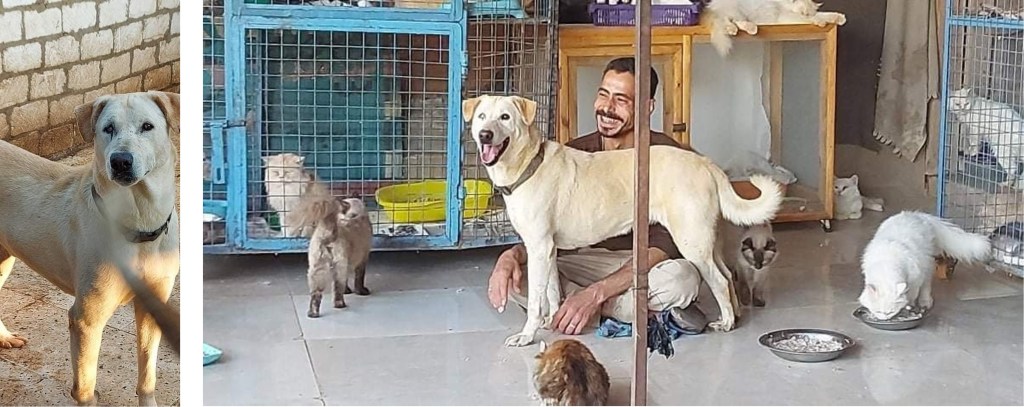
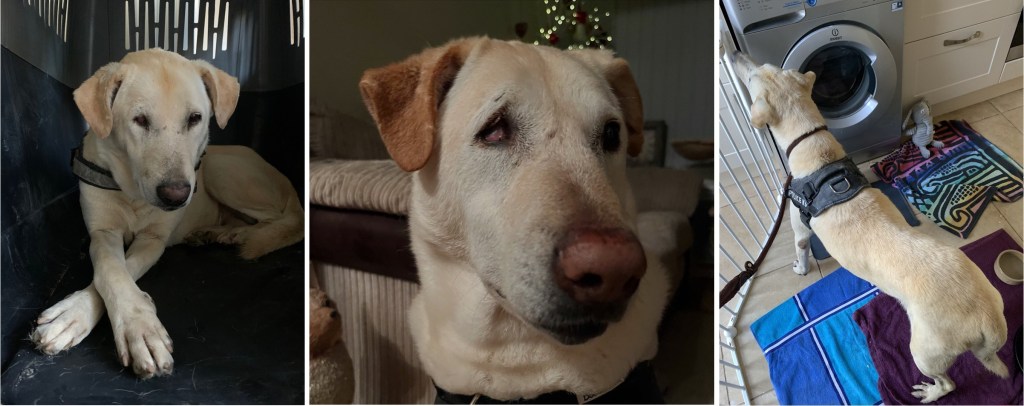
Peps’s story began in Egypt. He had been found with his brother at approximately 6 months old on the street by volunteer rescuers from the ESMA Shelter (Egyptian Society for Mercy to Animals). Sadly the rest of his family had been poisoned and did not survive. Initially upon arriving at the shelter, it wasn’t identified that Peps was blind as he coped so well, using his brother as his eyes, After a few months his brother got adopted and Peps’s disability became more apparent. He struggled at times and was bullied by some of the bigger, stronger dogs. He spent time in the cat shelter and looks extremely happy there!

Peps was identified by the English charity Miracles Mission as a dog they would like to try and help. Miracles Mission have identified many disabled and sick animals who do not cope well in shelters around the world. They started searching for a home for Peps and after contacting them, I arranged for him to come over as a foster dog and he arrived in June 2021. It wasn’t long before I decided he fitted in so well that I adopted him. 

Peps had a really long journey by plane to France, then by road, across the channel to England. He travelled with his friend Selim, who was on his way to his new home with my friend Martine! At some point they ended up getting switched in their crates but fortunately we got them round the right way! Selim has only three legs, so it was fairly easy to see they were in the wrong crates!

It was very late in the evening when Peps finally arrived. He was very quiet and shut down. He didn’t want to come out of his crate or eat, so I left him to decompress, sitting nearby and talking quietly to him. It must have been such a shock for him.

The next morning, I coaxed him out of the crate and he ventured into the garden to go to the toilet. He moved very carefully and slowly, almost mapping out where he was with every step. Very quickly he learned where the door was, where the step was, where the water bowl was….. It didn’t take long for him to know exactly where everything was. He does this whenever we go somewhere new and will take some time to just walk around slowly and map his surroundings.

Peps adapted quickly to his new surroundings, but in reality it took months really for him to feel comfortable and know that he was HOME. He had probably never heard a washing machine before, never experienced walking in the rain before, never felt or heard leaves falling from the trees – all of the things that we take for granted.  As he couldn’t see any of these things some were very scary for him. He rarely showed that he was frightened or anxious so I had to observe and try to pick up on some of his behaviours and mannerisms to understand what made him anxious.

Initially he was quite frightened outside as well and if we managed to walk about 50 metres along a path near the house, it was a success! Slowly over time we got a bit further and a bit further.

Just before Peps arrived it was discovered that he was suffering from Erlichia, a tick borne disease. He received treatment for this which was successful but was just another challenge for him to arrive with. Fortunately hiding tablets from him is quite easy 🙂

After his initial vet checkups it was also identified that he had luxating patella on both of his back knees. He was assessed by a specialist and determined that he did not need an operation as he coped well with this, but physio, strengthening exercises and walking would help to strengthen. He also has some arthritis in his front leg joints. 

All of these things were a challenge but with a rescue dog you never really know their full back story, so just have to deal with things as they come up.

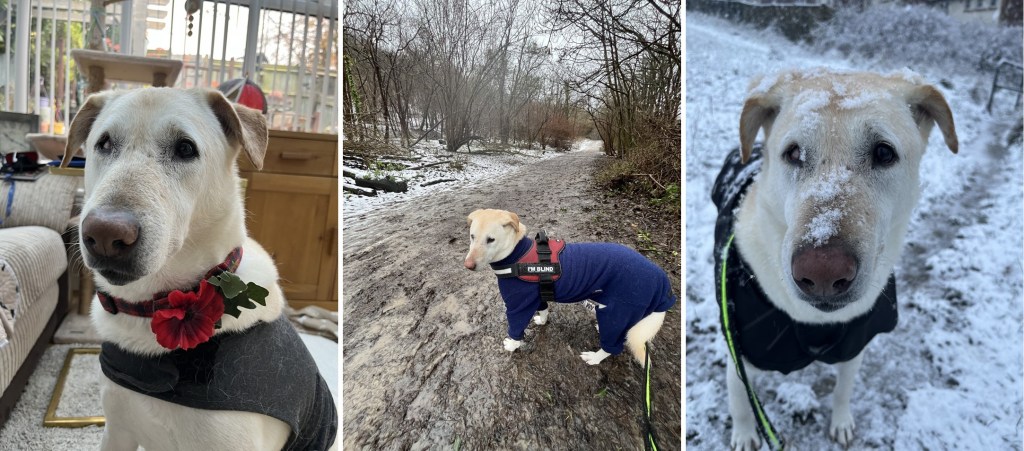
The only real difference I have found having a blind dog really is teaching him different things to assist him. Peps has learned “up” and “down”, so he can walk up and down steps / kerbs etc without banging his legs; “left” and “right” so he can navigate around and I also taught him “tree” as his obstacle word so he knows something is in front of him. He navigates around the house really well, and can always find the food cupboard and the fridge! I can move things around but do tend to try and keep things the same if I can. He walks off lead in fields and in the woods quite happily and sometimes leads the way back home if he is tired!

As he has become more settled at home, he also likes to shout at delivery drivers a lot! This is because he feels so comfortable and settled at home, he feels anxious if something threatens that safe feeling at home.

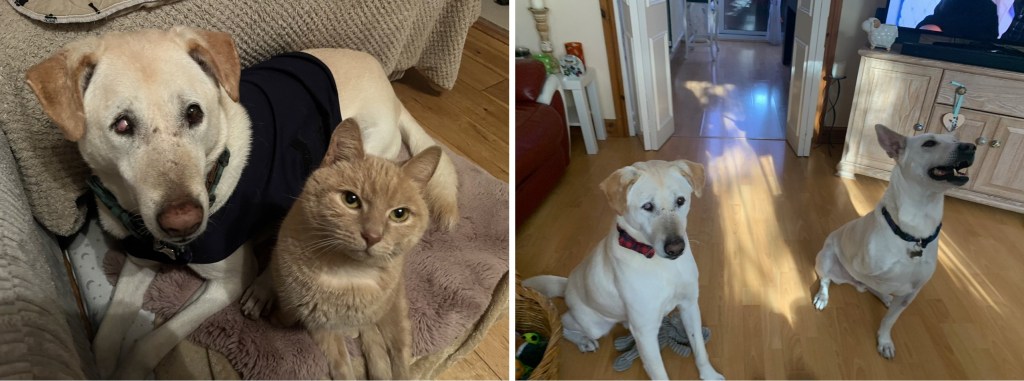
Peps has now been with me for 3.5 years, and I have honestly never met a dog so balanced before. He is so calm and gentle, lives happily with the cats and truly takes everything in his stride and adapts amazingly. He has been a registered Pets as Therapy Dog for two years and every week we visit a local residential home to spend time with the residents. As he cannot do a lot of physical exercise, this gives him mental stimulation and he loves the fuss and attention he receives.

It’s been lovely to keep in touch with the wonderful volunteers who cared for him in Egypt and share photos with them about his life now. They really did an amazing job, after he had suffered such trauma, to be able to re home such a balanced and happy dog so I’m very grateful to them.

Let’s Talk About Marilyn

A guest blog by Megan Rowlands

Hello there! We are Megan and Abby, and we share our home with our three amazing Spanish rescue sighthounds: Sally, Brisa, and Marilyn. Megan spent time growing up in Spain, and witnessed the heartbreaking animal welfare situation there. Podencos and Galgos are used for hunting due to their strong natural prey drive, and are often abandoned, tortured, or even killed when they are no longer needed. It’s estimated that around 50,000 hunting dogs suffer from this cruelty each year. Unlike other domestic breeds, hunting and working dogs in Spain don’t have the same legal protections, so they rely on rescue organisations for care and advocacy. Marilyn was rehomed to us through a wonderful UK-based charity called Project Galgo, and they have more information about the terrible challenges faced by Spanish hunting dogs here

Marilyn’s story

Marilyn’s journey hasn’t been easy. She was hit by a car in Spain at less than 1 year old, and left to die alone at the side of the road. She suffered a broken spine and would never walk again. Thanks to the incredible veterinary team at Fundacion Benjamin Mehnert hospital, Marilyn received the care she needed to recover. They even equipped her with a doggy wheelchair to get her back on her feet, and adorned her with the title ‘the earthquake on wheels’! Despite her incredible spirit, Marilyn was still waiting for a loving home. When we saw footage of her dramatic rescue from the roadside, and videos of how she’d progressed in the hospital, we couldn’t bear the thought of her being overlooked. So in November 2023, after a year of her waiting, we welcomed Marilyn into our family!

Why we decided to adopt a dog with disabilities

We had never considered having a dog with disabilities before Marilyn came along. Marilyn is rear-end paralysed and incontinent, so she uses her forelimbs to pull herself around (with help from a doggy wheelchair outside). We also manually express her bladder and bowels. Although we now know this isn’t that scary, the reality is that most people are put off by it. We live a quiet, simple life (some might say boring, but we love it!) with one of us working from home and we knew that we could give Marilyn the support she would need.

How does having a dog with disabilities differ?

Marilyn’s needs are not much different to that of any dog. The difference is how we fulfil those needs. For example, when we let Sal and Brisa out to go to the toilet in the garden, we take Marilyn to the bathroom to express her bladder. We all go out for a walk together, and Marilyn goes on her wheels. She doesn’t need a special diet, but we make sure that she has joint supplements, and we keep an eye on her weight so that she’s not putting unnecessary pressure on her forelimbs. She loves to play with Brisa, and her disability doesn’t stop her from winning tug or bitey-face, although Brisa is a bit mean sometimes and will run upstairs knowing that Marilyn can’t chase her!

We’ve also learnt to be extra-mindful of keeping the house clean and tidy, so that she doesn’t pick up any infections because her feet drag on the floor, and that she doesn’t get stuck on anything around the house.

If she wants to do something, she’ll either find a way to do it or she’ll tell us what she wants. Going up stairs is the only thing she can’t do on her own, so she’ll stand at the bottom step and rest her head on it to let us know that’s where she wants to go! It’s important to keep an eye out for communication cues, so that we know when she wants help. But this is much the same for any animal! Once these things become normal routine, it’s no additional effort to live a safe, clean and fun life with her!

What have the challenges been?

The first couple of weeks with Marilyn were hard to adjust to. We’d never expressed an animal’s bladder or bowels before, and were constantly worried that we weren’t doing things right or that we weren’t giving her what she needed. We desperately didn’t want to let her down. I remember looking at her little wonky body and crying at the sheer tragedy of it all. It was hard not to look at her and be affected by the hand she’d been dealt. But it got easier. We began to find lightness and humour in things. Marilyn is very cheeky and funny and she never feels sorry for herself, so we learnt not to. The more we did things, the more they became part of normal life. We followed a couple of helpful pages on social media, which developed our knowledge and allowed us to feel less alone. There really weren’t many sources of help out there, and at times it felt like we were the only people on the planet who had a dog like ours. It’s hard to know what’s ‘normal’ for a dog who isn’t ‘normal’! But thankfully there are more and more resources out there now to help (just like Woofability!), and more communities of very special fellow carers to join!

Another interesting challenge is people’s perceptions. Marilyn attracts a lot of attention, and her situation is both unusual and impressive. A common reaction is sympathy, and we often get people saying things like ‘poor thing!’. Whilst we know that comments like this come from a good place, we always advocate for Marilyn to explain why she wouldn’t want sympathy. We remind people that she’s very happy, she doesn’t know she’s different, and she effectively walks everywhere in a handstand, which is a darn sight more impressive than what you or I can do! As with humans, the language we use around disability is important in order to change perceptions, and we always focus on what she can do (impressively well!), rather than what she can’t. We are also determined to change misconceptions about disabled animals in the veterinary and wider animal welfare world, specifically around the quality of life they can have. Marilyn and many others prove that animals with disabilities can live fulfilled, happy and healthy lives, if just given the chance.

Why you should consider a special dog!

We already know that dogs are wonderful, but dogs with disabilities are extra-wonderful! They will surprise you, fill you with joy at watching their zest for life, and teach you valuable lessons. The bond between you is a powerful one, and you develop a unique partnership and we wish we had known about how wonderful having a dog with disabilities is sooner!

We would like to thank Megan and Abby for sharing Marilyn’s amazing story xxx

When Your Dog Becomes Deaf

by Linda GoodmanI’ve had dogs all of my life, but it is only in the last four years that I discovered what life was like living with a dog that has lost their hearing.

The late Teddy Bichon had phenomenal hearing and was always highly responsive when I spoke to him. In fact, he always liked a good two-way conversation. It was only once he turned 13 that I noticed a subtle difference in his behaviour.

He had started to sleep for longer and didn’t seem disturbed by noises that would once have seen him leap out of bed to investigate. When I called him, it was as if he was ignoring me – he could be a stubborn little character at times. It was only when I spoke more loudly that I would get a response, and that’s when I realised that his hearing was failing.

I checked his ears and they looked clean and I couldn’t spot any swellings around his ear, so I took him along to get checked by my vet, just to make sure there wasn’t any underlying cause for his hearing loss like debris deeper in his ear canal, or a possible ear infection. The vet examined him, shrugged his shoulders and just told me it was old age. I felt sad that my beautiful little man was losing his hearing, but quickly realised that it bothered me more than it bothered him.

Luckily at that point, although he had cataracts, he could still see reasonably well so I had to try and communicate with him using hand signals – not the easiest thing to teach a dog of his age. It was at this point that I wished I’d taught him hand signals when he was much younger.

Life carried on as normal, but because he couldn’t hear me when out on walks he could no longer go off lead for his own safety, except in secure locations. However, I didn’t need to tell him when it was time for breakfast, lunch or dinner, or when there was a treat on offer, as his sense of smell was as sharp as ever.

A year further down the line and Teddy had become completely deaf. I tried to look on the bright side. No longer would there be hysterical barking when anyone knocked on the door. No longer would he be woken up by Daisy’s barking every morning at 6am. He was happy in his own little world, and as long as he could see me, he felt safe and loved.

Dog deafness can happen for a variety of reasons, which is why it’s always important to get your dog’s ears checked by a vet if you notice a change. Some breeds are more prone to it than others and of course some dogs are born deaf.

When you’re with your dog every day, their hearing loss can be very subtle at first and you may not even notice it. Dogs are very clever and manage to adapt to their new circumstances pretty quickly.

Teddy’s deafness didn’t diminish our relationship at all, and while I had to adapt to his changing circumstances, he lived a happy and fulfilling life full of cuddles, good food and oodles of love until he passed away in October 2023 at the age of 16.

You can find out more about deafness in dogs, and how to help them, on our ‘Deafness’ page.

Fostering & Volunteering

by Linda GoodmanSomething you may not have considered before, or even be aware of, is fostering a dog. There are so many benefits for the dogs involved and for the fosterers.

Firstly, if you love the idea of having a dog but are not sure if your lifestyle is suited, it’s a way of seeing what it’s like to be a full time dog owner without the long term commitment. Far better to do this, than to buy a puppy and then discover you’ve made a mistake.

Secondly, it’s well established that dogs surrendered to rescues don’t do as well when kennelled as they do in foster homes. And it’s hardly surprising. These poor dogs suddenly find themselves institutionalised in kennels, a strange place that doesn’t look or smell like home, along with lots of other stressed dogs barking and crying. Don’t get me wrong, the kennel staff do their best to make sure every dog in their care is well-looked after, but with rescues full to bursting, it’s just not always possible to devote as much time to every dog as they would want. And let’s face it, nothing can take the place of a warm cosy bed in a home with a garden, where a dog can receive the one-to-one care, and the love and affection they crave.

Fostering is genuinely a lifeline for pets in need. But be warned, don’t be surprised if you fall in love with your foster dog and want to adopt them. It’s affectionately known as being a ‘failed fosterer’ and I’ve been one on numerous occasions.

What sort of dog could you foster?

There are dogs of every imaginable breed and age, including puppies, who need foster homes right now. Fostering is a brilliant solution for people who have never had a dog before, as well as for people who have lots of experience with dogs. It’s particularly beneficial for older, retired people who enjoy the company of dogs, or for people who like to go on holidays during the year and worry about leaving their best friend behind in kennels or with a dog sitter.

The rescue will usually provide you with everything you need to foster a dog, including food if required, and they’re always on hand with advice if you need it. The length of time you can foster for will depend on the dog’s circumstances and how quickly the right home can be found for them, and of course how long you are available or comfortable fostering for.

Helping people by helping their dogs

Sometimes fostering is used to help someone who has become homeless or they need to flee domestic abuse. These are people who are afraid to leave their dog behind and so put off leaving their abuser. Sadly most refuges for those fleeing domestic abuse don’t take pets, but with rescues offering foster spaces for their dogs, it can end up being a happily ever after when that person eventually finds a new permanent home, and they can be reunited with their beloved dog. One shelter that works with people experiencing homelessness, including those with pets, is St. Mungo’s.

Another reason fosterers are needed, is when people become ill and need to go into hospital for a few weeks but they have nobody to look after their dog. It’s incredibly rewarding being a fosterer, knowing that you’ve not only helped a dog in need, but a person as well.

The saddest reason for a dog needing a foster carer is when their owner has died, and no other family members are able to take the dog who is grieving the loss of their owner and their routine.

You can find out more about becoming a fosterer by contacting your local rescue. They’ll be so relieved to hear from you because there are just so many dogs today that need to get out of kennels and back into homes. You’ll really be a lifesaver, and that’s something you can feel really good about.

Volunteering

If you love the idea of having a dog, but just don’t have the time or space for a long term commitment, something else to consider is becoming a volunteer for your local rescue. That way, you can be around dogs as much as you like, and you’ll be helping the dogs as well as the rescue. Other than the large, well-funded rescue charity chains, there are thousands of small, independent rescues that rely on the good will of volunteers for things like fundraising and dog walking. They often don’t have paid staff and are 100% dedicated to saving the lives of dogs in need. Some even specialise in certain breeds. In becoming a volunteer you’ll be doing so much good in your spare time and will find it very rewarding.