

A guest blog by Jemma Cooper BSc RVN DipAniPhys RCH MIAAT MCHA …
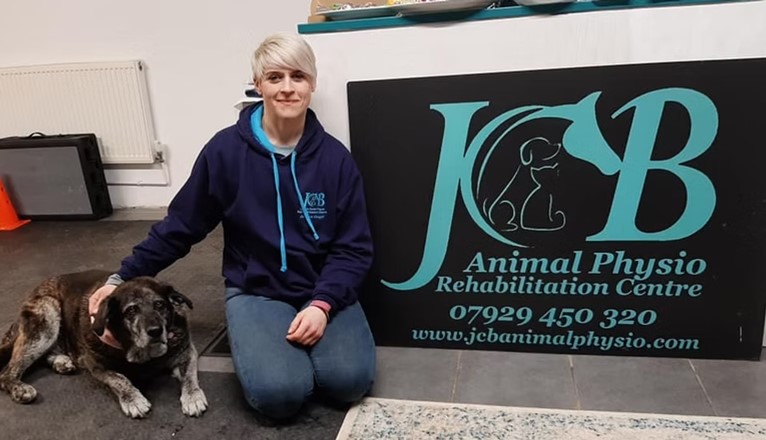
When most people think of hydrotherapy, they either think of elite human athletes recovering from injuries, or cold-water swimming and ice baths. But did you know canine hydrotherapy can also be an huge game changer in dogs?
As canine hydrotherapists, we’ve seen directly how this hydrotherapy can dramatically improve the health, mobility, and quality of life for our four-legged friends. Yet, despite its growing success, many dog owners still don’t know that hydrotherapy is an option!
What Is Canine Hydrotherapy and its effects?
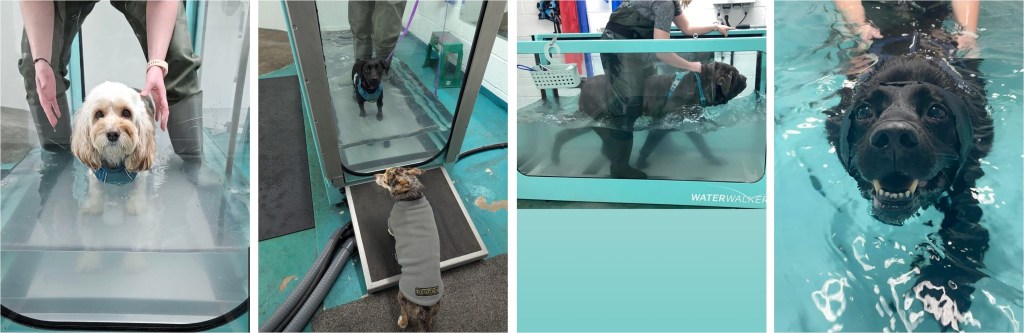
Canine hydrotherapy refers to the use of warm water to help dogs recover from injury, manage pain, or improve physical function. It takes place in a controlled environment, like an underwater treadmill or canine swimming pool, where a therapist can monitor and guide the dog’s movements.
Controlled swimming helps to improve cardiovascular stamina, muscle tone, range of movement and is particularly helpful in aiding recovery from injury or surgery whilst also improving general fitness, especially in the management of obesity. Hydrotherapy is also considered to be a natural anti-inflammatory through its ability to reduce tissue swelling.
Hydrotherapy in conjunction with veterinary treatment can significantly improve the quality and rate of healing following surgery or traumatic injury. Post surgery the careful use of hydrotherapy can help with rehabilitation and increase the chance of a successful return to full fitness.
In water the heart needs to work harder in order to meet the increased demand for nutrients by all the muscles which are being worked, this sounds like hard work – it is – and that’s the idea! For most dogs a short hydrotherapy session is an extremely challenging workout. However, the buoyancy of the water and the fact that sudden twists, stops and falls are impossible makes hydrotherapy a safe and effective form of exercise. It’s also very enjoyable for most animals. Whilst immersed in water the chest is subjected to the effects of hydrostatic pressure; this means that every breath requires more effort. In particular, muscles used for breathing in have to work much harder and as muscles strengthens with exercise this improves the whole respiratory system.
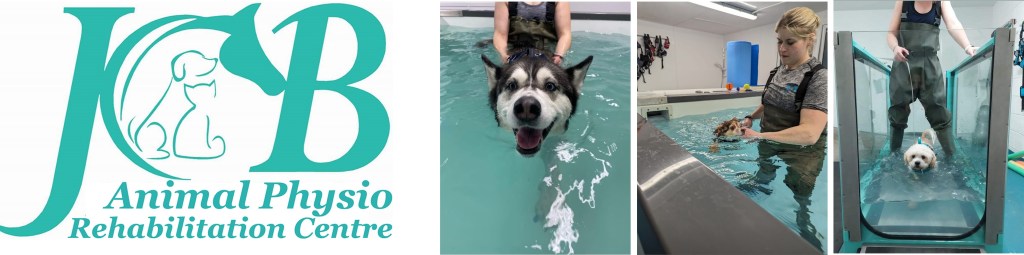
Hydrotherapy is an excellent form of exercise because most of the muscles used in daily movement are involved – without the stresses caused by motion on hard ground. On land, each footfall creates a shock wave which travels up the limb and is absorbed by bones, tendons and joints. While these stresses are necessary to maintain healthy strong bone, if these shock waves are severe or repetitive they can actually damage or weaken the limb, particularly an arthritic joint or one recovering from an injury or surgery. Hydrotherapy allows the “working out” and strengthening of the muscles while avoiding this potentially damaging concussion. Due to the increased resistance of movement created by the water, the muscles have to work harder than they would do on land.
It is much more beneficial to treat dogs in heated water since cold water causes constriction of the blood vessels near the skin and to the superficial muscles (those just under the skin) which restricts the flow of blood making the muscles less efficient. Warm water increases the circulation of blood to the muscles, increasing the supply of oxygen and nutrients and flushing away waste products, leading to muscle relaxation and a reduction in pain and stiffness. Improved circulation reduces swelling around an injured area and enhances healing.
The buoyancy effect of water reduces the load on weight bearing joints which helps to reduce pain and allows easier movement and exercise. Hydrostatic pressure applied to the body in water can assist in reducing swelling, and as the pressure increases with depth this encourages fluid swelling (oedema) in the limbs to move away from affected areas, immersed lower in the water back towards the body. This is assisted by exercising the limb to enhance circulation. Buoyancy and hydrostatic pressure also help to support the body during exercise; this can aid the re-education of gait patterns in neurological conditions and reloading of a limb post-surgery.
The buoyancy of water reduces stress on joints, while its resistance provides a gentle but effective way to build strength, improve range of motion, and promote healing. Because it’s low-impact, hydrotherapy is particularly beneficial for dogs who can’t handle more traditional forms of exercise due to age, injury, or medical conditions.
Common Ailments that Hydrotherapy Can Aid or Treat
We’ve seen dogs come in for hydrotherapy for all kinds of reasons. Here are a few of the most common:
• Post-surgical rehabilitation (e.g., after cruciate ligament repair, spinal surgery, or hip replacements)
• Arthritis and joint issues
• Hip or elbow dysplasia
• Neurological conditions like intervertebral disc disease (IVDD)
• Obesity and weight management
• Sports conditioning for canine athletes
• Age-related muscle loss and stiffness
Whether your dog is recovering from an operation or simply slowing down with age, hydrotherapy can provide a safe, effective way to regain or maintain strength and function.
The Benefits – They’re More Than Just Physical
While the physical benefits are well-documented, there’s also an emotional and behavioural side to hydrotherapy that’s just as important. Many of the dogs we work with come in stressed or fearful. Now, the first session of something completely new can always been quite daunting for them, however they quickly learn that it’s a safe place. They may have been living with pain, gone through surgery, or lost confidence in their bodies. But water has a calming, almost magical effect. It allows dogs to feel supported, to move without fear, and to experience success again. As they regain physical ability, their confidence soars as well. Owners often tell us how their dog’s personality “came back” after starting hydrotherapy. They’re not just moving better—they’re happier, more playful, and more engaged.
What to Expect in a Session: A Quick overview
• Assessment: Each dog undergoes a thorough evaluation to determine the best course of treatment. We consider the dog’s condition, medical history, temperament, and goals – this involves a physiotherapy treatment along side a gait assessment, exercise rehabilitation and much more.
• Tailored treatment plan: Every dog is unique, so we create a customised plan. This might include underwater treadmill sessions, swimming, stretching, and massage. This also tracks progress where we can adjust your dogs plan as needed.
• The hydrotherapy consult: Your dogs heart rate, respiratory rate and gum colour will be checked on arrival to ensure they are healthy to swim. To begin – a lovely warm shower – this ensures your dog is warmed, and free from dirt that may damage our water sanitation. Your dog is then introduced slowly to the pool or treadmill, with lots of guidance and encouragement from a therapist which ensures stress levels are kept minimal. Once engaging in the task, the dogs relax and use the equipment better, getting the most out of the session.
• Collaboration with vets: We often work alongside your dog’s vet to make sure everyone is on the same page and your dog receives the best care possible, reporting back frequently and rising any issues we may have.
Is Hydrotherapy Right for Your Dog?
Hydrotherapy can benefit a wide range of dogs—but like any treatment, it’s not a one-size-fits-all solution. It’s always important to consult your veterinarian before starting any new form of therapy. That said, if your dog struggles with mobility, is recovering from injury or surgery, or needs a safe way to lose weight, hydrotherapy could be a game-changer.
Spreading the Word
Despite its proven benefits, canine hydrotherapy is still relatively unknown to many pet owners. That’s why we’re passionate about sharing our knowledge and educating the public. Every week, we meet someone who says, “I wish I’d known about this sooner.” Our goal is to make hydrotherapy as common a treatment as any other form of canine care. The more awareness we raise, the more dogs can get the help they need—and the happier and healthier our pets will be.
JCB Animal Physio are located on the outskirts of Cowbridge, South Wales.
 WOOFABILITY