

A guest blog by Jemma Cooper BSc RVN DipAniPhys RCH MIAAT MCHA …

Many dogs get a great deal of pleasure from chasing a ball, and many owners undoubtedly get a lot of joy from throwing a ball and watching their dog having fun. What many people don’t realise is that this activity isn’t as beneficial as it may seem.
Often you hear veterinary and animal rehabilitation professionals telling owners that ball throwing is not an ideal activity for their dog, particularly arthritic or injured patients. In fact, it could be said that it is not an ideal activity for any dog, whatever their age or condition. Ball throwers are an item easily purchasable at most pet shops and an easy way for owners to think their dogs are going to have a ‘good run’ or ‘burning off some excess energy’. But what are the effects physically and mentally of such a driven, high impact activity?
The Throw!
So, when we throw the ball for our dog – what exactly happens?
• Firstly (if our dog is facing us) we ask our dog to turn on a sixpence to face a different way, often twisting and putting all their weight on their hindlimbs in an uncontrolled manner.
• We then ask our dog to go from virtually standing or twisting round, to a gallop.
• The dog then brakes sharply, often skidding on the underlying surface, throwing their neck back initially and then bringing all their weight forward as they reach for the ball.
• Sometimes they jump to catch the ball in mid-air, often twisting at the same time.
• Then we ask them to land, turn again and gallop back to us, often skidding to a halt at the end, extremely happy with themselves that the caught the ball in record time.
When broken down and taking the ‘fun’ out of ball throwing, we can actually see that we’re asking our beloved dogs to be an explosive weightlifter to propel them forwards, a 100m sprinter, a sniper to be able to keep their eye on the ball, an acrobat and a ballerina all in one! In summary, chasing a ball combines sharp acceleration, high speeds, rapid and uncontrolled deceleration that includes rotatory forces on fundamentally unstable joints. In addition, this activity is usually repeated over and over again.
Now for the nitty gritty…
The forces on a dog’s skeleton and muscles are enormous throughout this process. If a dog increases speed through the chase, it can as much as double the forces generated at either end. It is said that the most dangerous component of ball chasing occurs during the braking process and is often responsible for shoulder and carpal (wrist) injuries. Repeated micro-trauma to muscles and cartilage is the cause of long-term damage and that the older a dog gets, the more likely it is to be carrying small injuries.
The Physical Effects:
To understand why dogs should not chase balls, it’s necessary to understand a little about the musculoskeletal system of the dog as well as the mechanics behind their movements. Muscles and joints are prone to trauma during high energy activities. The explosive action that the dog undertakes to chase in a sudden moment uses powerful propulsive forces. The same forces used to initiate this high-speed activity are experienced in reverse when suddenly breaking and landing is necessary. Unpredictable actions involved in these strenuous actions can result in muscles and joints being put under great stress for which they aren’t designed or weren’t prepared.
The dogs fore and hind limbs are developed to fulfil specific functions as a quadruped. The hind limbs act as the power, house for the dog, propelling them forward. Power is transmitted from the back legs along the spine to obtain the forwards motion, which ranges anywhere from the dog stepping underneath themselves to go from stand to walk, to both hindlimbs flexing underneath the body as far forwards as physically possible for the dog, to them push backwards to explosively drive forwards. This is also the same situation when jumping, increasing their flexion through the hindlimb to push them selves up and reach with their forelimbs.
Whereas the forelimbs act predominantly as the braking and shock absorbing system for the dog when performing high impact exercise. To allow dogs to move efficiently by taking long strides, they have sacrificed the same stability that we have through their shoulder joints. A dogs’ front limbs have no bony attachment to the skeleton. The thoracic sling is the group of muscles that attach the forelimb, but at the same time of being responsible for the movement and stability of the forelimbs and bearing most of the dog’s weight. Dogs carry about 60% of their weight through their front legs and 40% through their hind legs, with their centre of gravity being just behind the forelimb (girth area). Therefore, when chasing a ball, jumping, biting the ball, and then landing, with quick turns and uneven movements, the pressure and weight exuded through the forelimbs is large and has the potential to be detrimental.
The Physical Effects on Dogs with Ailments:
A common problem in dogs is that they lose hindlimb strength through many reasons – general aging process, arthritis, injury, meaning more weight again is taken onto the forelimbs while the dog throws the weight forwards onto the forelimbs in compensation for the ailment. This again adds even extra force to the forelimbs before beginning any high energy activities.
Dogs have a fantastic ability to subtly offload weight, which means they can easily compensate when first dealing with a minor injury. Dog owners don’t typically notice this subtle transfer of bodyweight and the development of muscular imbalance, so the ball throwing continue, as does the opportunities for further damage.
Once the dog has started to compensate, these overworking tissues are more likely to get damaged in these high impact activities. Sadly, we often find that the owners can misinterpret their dogs compensated overdeveloped muscles as a sign of health, not realizing that other areas of the dog’s body have correspondingly decreased in mass, mobility, strength and function. Eventually this ability to compensate so well fails. The compensatory areas themselves become tense and painful but by this stage, we have multiple areas of concern.
A Dogs Ability:
There are many factors that can also affect the dogs’ ability to perform high energy exercises and the impact these can have on their body. These include conformation, ailment (known or unknown), behaviour towards the activity, the dog’s fitness, body condition score and weight.
Over the years, we have influenced the form of our dogs to change their function. While dogs no longer need to hunt down prey or run from attackers, humans have bred them for our own purposes. It is not hard to see that this species has a huge diversity of form, from the sledding breeds or collie types who have muscles designed to work at a steady speed over long distances, to greyhounds who have muscles that work efficiently for short sharp bursts of speed. It must be considered the fact that certain breeds of dog were bred to serve a specific purpose and have subsequently adapted to do so, while others were bred for pleasing aesthetics and conformational extremes. This means we see significant differences in power, strength, and athleticism among different breeds, and even within breeds when looking at the individual.
The Greyhound, for example, is a sprinter, muscular, with light, yet long bone structure, higher red cell concentration, and less body fat per kilogram mass than any other breed. This allows for efficient delivery of oxygen to organs and muscles while minimizing load and impact in joints, meaning they have specialized musculoskeletal systems for sprinting.
The turning and uneven, explosive forces on the limbs when throwing a ball

The Collie has a greater range of motion in all joints than healthy Labradors, while also being lighter on their feet with reduced stance phase of locomotion. This allows them to drop and revert from their herding pose rapidly to catch stray sheep!
On the other hand, Dachshunds and Basset Hounds have a significant disproportion between limb (very short) and back length (very long), resulting in decreased core stability, short strides, and an inclination to experience intervertebral disc disease.
We must take into consideration how fit a dog is to be performing such tasks. Any excess weight on your dog will add in the above factors of forces down the limbs and excessive loading. It is also assumed that an overweight dog is generally not as fit as an active dog of an ideal weight, resulting in tendons, ligaments and muscles that aren’t as strong and flexible as they could be to cope with high impact exercise.
The Behavioural Effects
Ball throwing is an activity that many dogs and owners engage in on a regular basis. In recent years, concerns have been raised about not only the physical effects but the mental impact this can have on dogs.
Many dogs get overly excited during ball games. This increased arousal can lead to an increased heart rate and adrenaline levels, causing an increase in cortisol levels, and can lead to ‘erratic’ behaviours as a result of reduced impulse control and frustration tolerance (Canine Arthritis Management, 2024).
Adrenaline is designed to be released in short bursts, as a one-off (such as in the wild if a dog is chasing prey) to kick start the flight or fight response. By repeatedly throwing the ball and initiating a chase, this means adrenaline is released for much longer periods. Cortisol levels take several days to return to normal after peaking, and studies have found that prolonged exposure to high cortisol levels can be damaging to long-term health.
Adrenaline and cortisol both play a role in the expression and regulation of behaviour. Living with increased levels over a long period of time can be responsible for a few problematic and dangerous behaviours, including your dog’s inability to ‘switch off’, cope with challenging situations and even show more aggressive behaviour. Considering one of the main reasons people throw balls for their dogs is to tire them out, it can be hugely counterproductive when their adrenaline and cortisol stay high following the exercise, meaning they can’t settle or relax. Also due to this, it can increase the likelihood of them chasing after another dog in the moment, or after ball play and can increase reactivity in some cases.
The over exertion on the neck going back to catch, twisting of the body and impact on landing of a ball throw

So, is it never safe to throw a ball?
It’s very difficult when presented with this question, as usually associated with this, is a ball loving dog who’s just waiting for it to be thrown. It is always recommended that if your dog has an injury or ailment that ball throwing shouldn’t be performed. However, if you do want to throw a ball, here are some suggestions to abide by:
• Never throw a ball for a dog who is injured or has arthritis – this will only exacerbate the problem.
• Only throw a ball once the dog is warmed up.
• Use a frisbee in stead of a ball as these glide down and dogs tend to slow with the speed of the frisbee
• Never throw balls on slippery floors or where it can bounce off items.
• Do not throw balls on wet surfaces, mud or unstable surfaces such as gravel.
• Throw straight and low down.
• Do not throw downhill.
• Do not throw repeatedly and keep the duration down.
• Do not throw for more than one dog at the same time – two dogs colliding while trying to jump for the same ball is a definite way to end up in the vets!
Warm up
It is sadly very normal for a dog not to be given the chance to “warm-up” correctly prior to playing ball. Warming up or low impact exercising prior to high-stress activities “prepares” them for the more explosive work and results in less damage. However, often dogs are thrown a ball as soon as they reach a field or immediately upon getting out of the car. Unfortunately, it is common sight that owners toss a ball with a ball thrower twenty times and immediately after, for the dog to then go straight back in the car without a cooldown either. It’s always advised to perform at least 5-10 minutes of warm up before performing high impacts tasks – this can be a walk, some off lead work, leading to some scent work, recall work and then introducing ball play.
So, what’s the alternative?
Tug of war:
• Playing tug with your dog is a great interactive game, and it helps them to build a much stronger bond with you compared with throwing balls. It can be performed in a controlled manor, and lots of reward (and wins) allows them to demonstrate their predatory nature and harks back to them catching and tearing apart their prey.
Scent games:
• Toss some treats in the grass and let your dog sniff them out.
• Teach them to find their favourite toy (can be a fabulous way to put the beloved ball to use).
• Scent work like ‘Man Trailing’ is very mentally stimulating and great fun for both owner and dog.
Running tricks:
• Teach your dog to run around a tree and grab a toy out of your hand on his way back towards you.
• Another great running alternative is practising recalls from a stay!
Training Activities:
• Practice some recall skills, obedience skills, teach your dog new tricks or behaviours that will enrich your time spent together. Spend some quality time also doing a couple of fitness exercises during your walk outside and help with improving overall body condition.
In summary, there are many reasons why ball throwing for dogs can be detrimental. The negative physical and mental impact, both long and short term, far outweigh the positive; most of which are only experienced by the dog in the “high” of the moment. It is never the wish of the vet, rehabilitation specialist or behaviourist to deprive dogs of a fun-filled life. The goal is to make people more educated and aware about activities that can be detrimental to their dogs.
References:
Bockstahler, B., Levine, D., and Millis, D.L., (2004) Essential Facts of Physiotherapy in Dogs and Cats, Babenhausen, Germany
Canine Arthritis Management, 2024. www.caninearthritis.co.uk
Millis, D.L., and Levine, D., (2014). Canine Rehabilitation and Physical Therapy – Second Edition, Elsevier Inc, UK
Polite Paws Dog Training, 2024. www.politepawsdogtraining.co.uk
Jemma Cooper BSc RVN DipAniPhys CH MIAAT
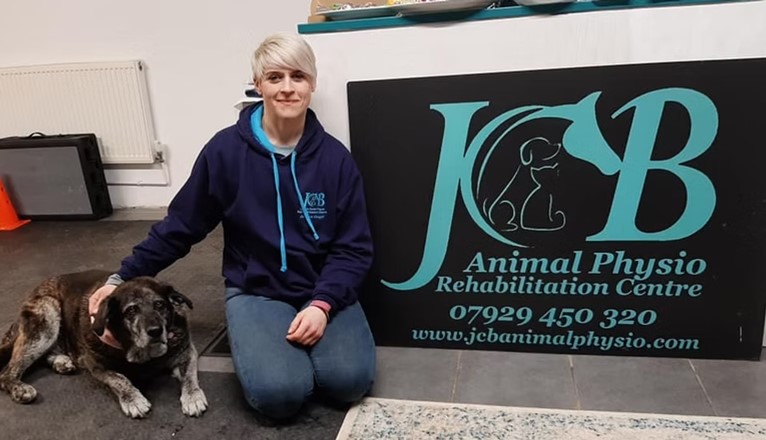
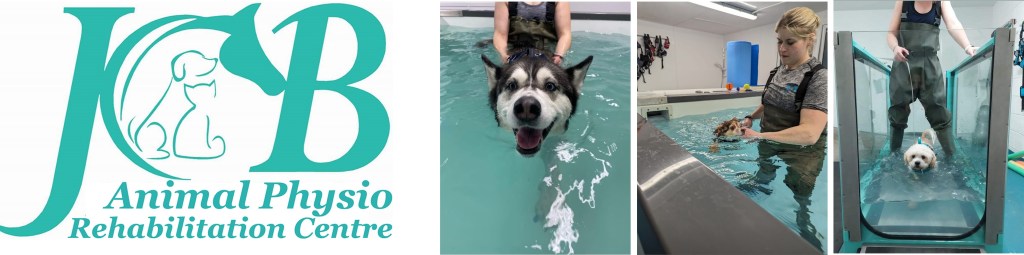
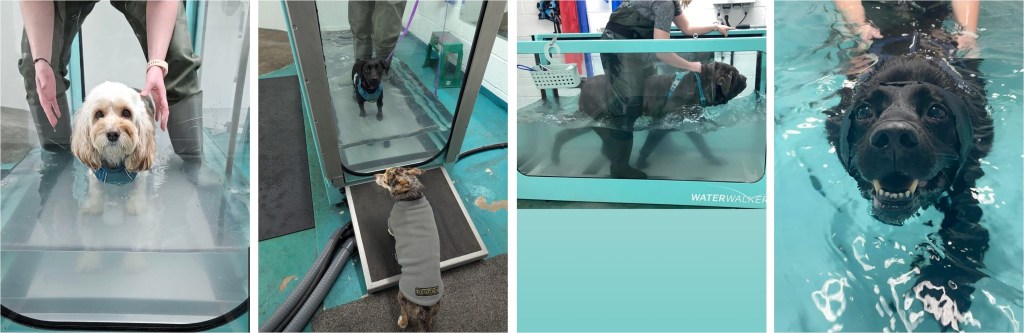
Jemma has been in the animal and Veterinary profession for over 10 years, having worked as a Registered Veterinary Nurse, before completing her physiotherapy qualification and canine hydrotherapy qualification. Jemma set up JCB Animal Physio Rehabilitation Centre in 2020 which now offers physiotherapy, underwater treadmill hydrotherapy, pool hydrotherapy and class 4 laser treatments, and has introduced two more hydrotherapists and physiotherapists to the team recently. It has always been Jemma’s passion to approach all animals in a holistic manner, closely working with Veterinary practices, and combining many different modalities to rehabilitate patients to the best her ability.
 WOOFABILITY